Proudly serving Tucson, Oro Valley, Marana, Catalina Foothills, Casas Adobes, Sahuarita & surrounding areasCall or Text 24/7: 520-569-2093

Tree Removal & Landscape Maintenance in Casas Adobes, AZ

Tucson Tree Service Co. provides tree removal and full-service tree care throughout Casas Adobes, Arizona. Our crews handle tree trimming, tree pruning, stump grinding and removal, emergency tree service, storm damage cleanup, palm tree trimming, cactus removal, arborist consultations, and tree planting. We evaluate desert species and site conditions before recommending maintenance, treatment, or removal.

Caliche-heavy soil can force roots to spread shallow and wide, while desert heat and sudden monsoon saturation add stress. Mature mesquite, eucalyptus, Aleppo pine, palms, and other trees may develop deadwood, canopy imbalance, or structural decline. We inspect the root zone, trunk, canopy, and clearance from structures or utilities before outlining options. Call for a free tree removal quote and a written estimate before cutting begins.

We serve established and newer properties near Oracle Road, Ina Road, Foothills Mall, and the Rillito River wash, with care suited to Sonoran Desert conditions.

★ ★ ★ ★ ★4.9/5 Average Rating - 20+ Years of Experience - Casas Adobes Tree Service Company Specialists - Residential & Commercial
Complete Tree Care

Tree Services in Casas Adobes, AZ

One call covers removal, maintenance, storm response, and long-term tree health for properties throughout Casas Adobes, a community of nearly 70,973 residents. Each recommendation considers species, structural condition, root-zone constraints, nearby structures, and utility clearance. Tucson Tree Service Co. also provides tree care in Sahuarita, AZ when service is needed farther south.

Tree Removal

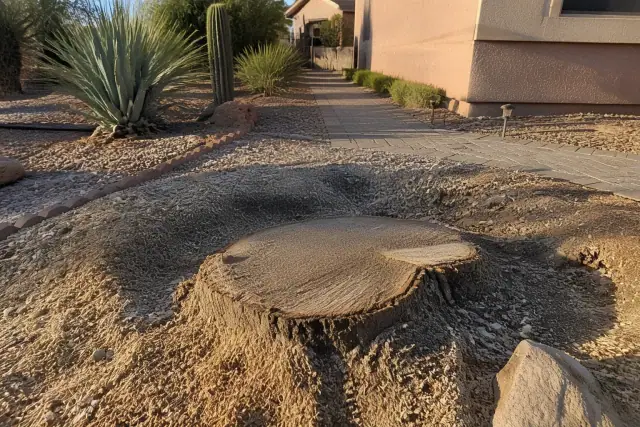
Freshly cut tree stump with wood shavings in a desert landscape in Casas Adobes, AZ.

We assess trunk integrity, root heave, and canopy lean before recommending removal. Trees near a home, wall, pool, driveway, or power line can be dismantled in controlled sections, with crane or bucket-truck access planned for large mesquite, eucalyptus, or Aleppo pine. Debris is hauled away unless you ask to retain suitable wood for firewood or mulch.

Explore Service

Tree Trimming

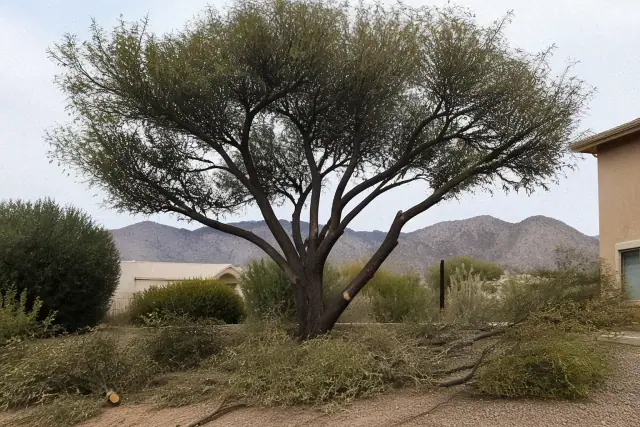
Tree canopy after pruning with fresh-cut branches and debris on the ground in Casas Adobes, AZ.

Regular trimming balances the canopy, reduces wind resistance, and creates clearance from rooflines, power lines, and walkways. Cuts follow ANSI A300 pruning standards rather than damaging topping practices. Most residential trees are evaluated on a 12- to 18-month trimming cycle, with palm and citrus schedules adjusted to their different growth needs.

Explore Service

Tree Pruning

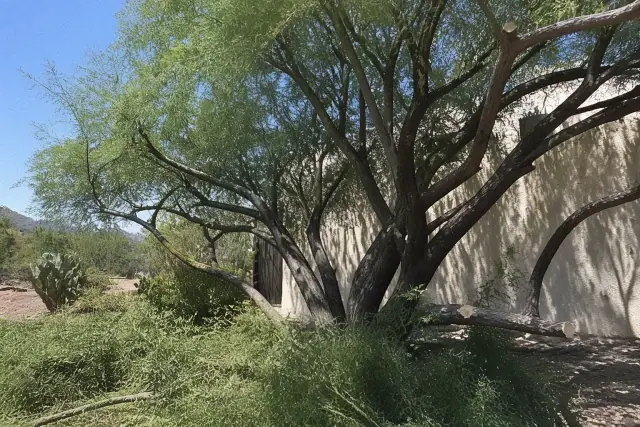
Precision pruning of a dense tree crown in a Sonoran desert landscape in Casas Adobes, AZ.

Targeted pruning removes crossing branches, deadwood, and diseased growth before problems spread through the canopy. Young trees can be trained for stronger branch structure, while mature palo verde and ironwood benefit from selective thinning that lets wind pass through. Proper collar cuts help limit decay entry points.

Explore Service

Stump Grinding & Removal

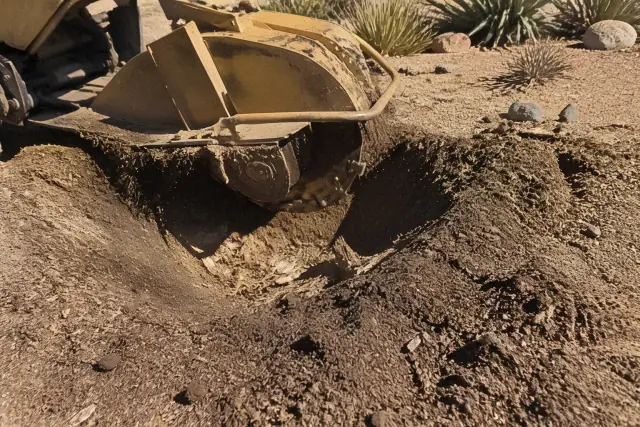
A stump grinder machine pulverizing a wooden tree stump into mulch in a desert yard in Casas Adobes, AZ.

Stump grinding typically takes the remaining wood 4 to 6 inches below grade, clearing the way for decomposed granite, grass, or new landscaping. Pricing depends on stump diameter and root spread because large mesquite and eucalyptus roots require more work than a small ornamental. Grinding can often be completed the same day when bundled with tree removal and crew availability allows.

Emergency Tree Service

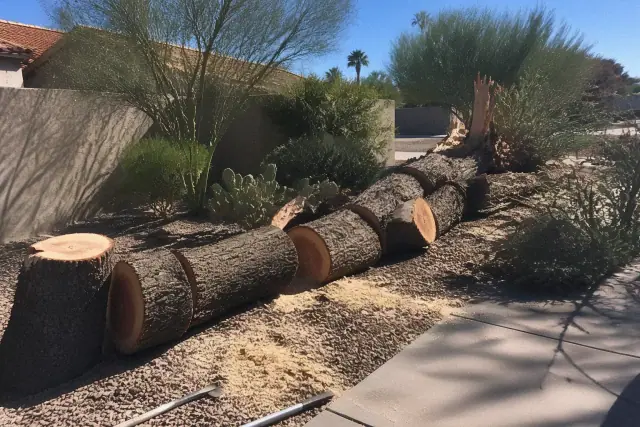
Arborist cutting a downed tree trunk into logs after a storm in Casas Adobes, AZ.

Emergency calls are triaged by risk, with blocked driveways, threats to structures, and trees resting on power lines receiving priority. Our 24/7 response begins by stabilizing the immediate hazard, then planning the full removal or cleanup. Utility safety is addressed before cutting whenever limbs or trunks involve overhead lines.

Storm Damage Cleanup

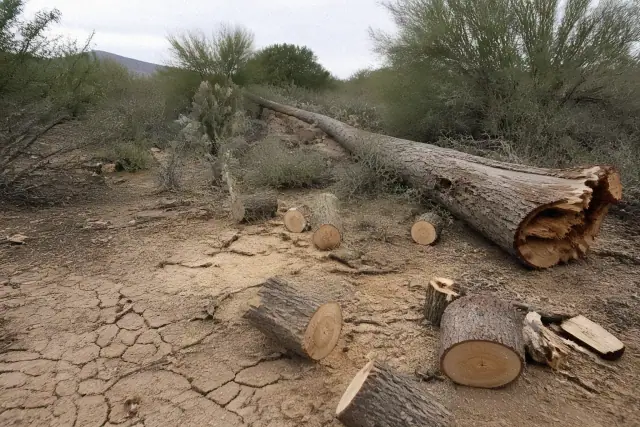
Storm damage cleanup of a fallen tree trunk cut into logs in Casas Adobes, AZ, surrounded by desert scrub and dry soil.

Summer downbursts can exceed 50 to 60 miles per hour in isolated cells, snapping weak wood or uprooting shallow-rooted trees. We secure the site, remove hanging limbs or split trunk sections, and judge whether the tree can be saved from its canopy loss and trunk integrity. Chippers and haul-away trucks keep storm debris from remaining on the property.

Palm Tree Trimming

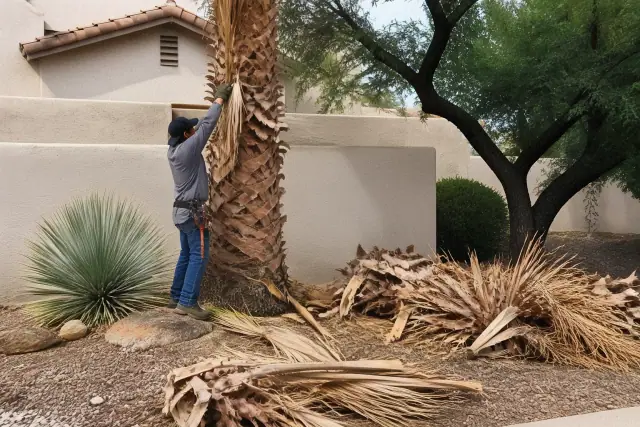
Worker trimming dead fronds from a tall palm tree in a residential yard in Casas Adobes, AZ.

Palm care removes dead fronds and old seed pods that can add fire risk or drop onto walkways and pools. We avoid over-trimming and hurricane cuts, which strip too much of the living crown and weaken photosynthesis. The goal is a healthy, full frond canopy rather than a bare-pole appearance.

Cactus Removal

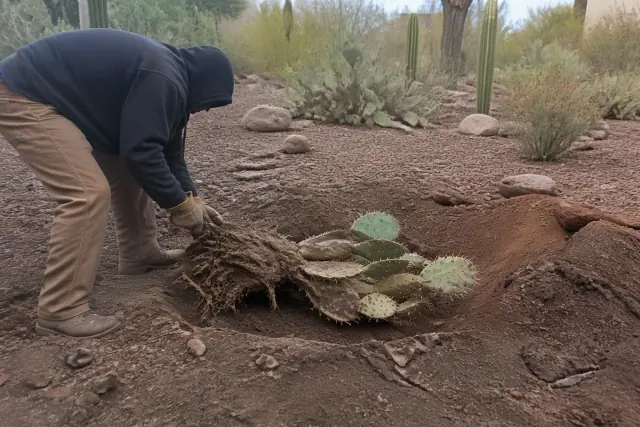
Cactus root ball being removed from the soil in a Casas Adobes, AZ landscape with native desert plants.

Saguaro, prickly pear, and cholla require specialized handling, cutting, and disposal of spines and pads. Because saguaros are protected under Arizona native plant law, removal or relocation on private property may require notification to the Arizona Department of Agriculture. Root material is addressed so unwanted growth does not return from what remains.

Tree Health & Arborist Consultation

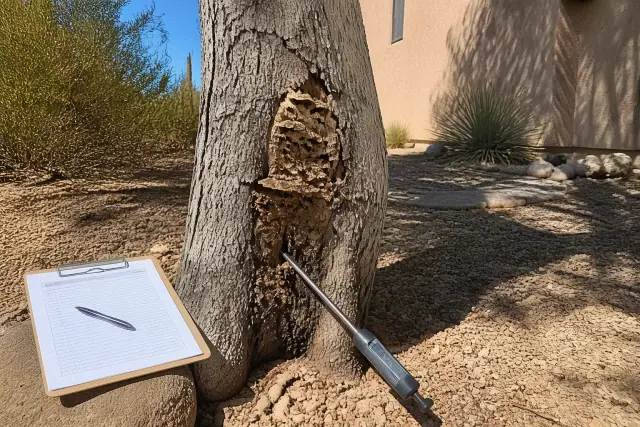
Arborist examining tree trunk decay and fungal growth with a soil probe and clipboard in Casas Adobes, AZ.

An arborist consultation can identify root rot, borer damage, chlorosis from iron deficiency in alkaline soil, and drought stress. The assessment considers both canopy health and root-zone conditions before recommending deep watering, soil amendments, treatment, pruning, or removal. Early diagnosis can preserve trees whose problems are still manageable.

Tree Planting

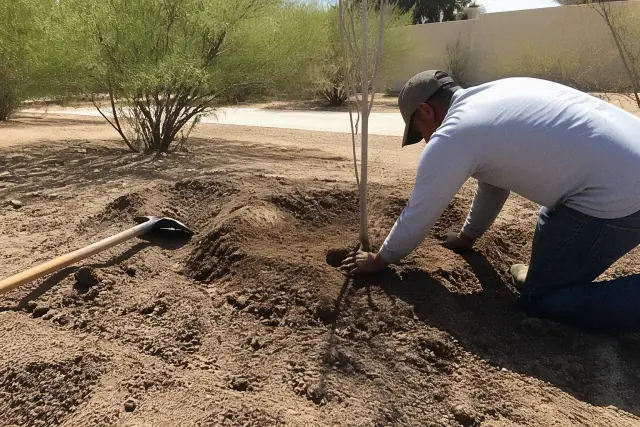
A newly planted sapling in a soil pit with mulch and irrigation tubing, featuring Catalina mountains in Casas Adobes, AZ.

We plant desert-adapted palo verde, desert willow, and ironwood, along with citrus and ornamentals for irrigated landscapes. Correct depth and a wide, shallow planting hole are especially important where caliche compacts and drains poorly. New trees receive a watering schedule suited to the species and planting season.

Tree Care Decisions

Choosing the Right Tree Service in Casas Adobes

The right service depends on whether the goal is hazard reduction, structural improvement, health diagnosis, clearance, cleanup, or new planting. A useful recommendation accounts for the tree itself, the surrounding property, desert soil, and the safest way to complete the work. These six factors help define an appropriate scope.

Tree Condition and Risk

Start with trunk integrity, root heave, canopy lean, deadwood, and disease. A mesquite with about 30% canopy dieback may respond to pruning and irrigation, while a eucalyptus showing root rot can require a very different recommendation.

Site Access and Clearance

Proximity to a roof, pool, wall, fence, driveway, or utility line changes how the work must be staged. Open-space felling, sectional rigging, and bucket-truck or crane access each require a different plan.

Species-Specific Care

Mesquite, eucalyptus, Aleppo pine, citrus, palms, and desert natives do not share the same pruning, watering, or removal needs. The work should reflect the species, growth pattern, living crown, and response to Sonoran Desert conditions.

Root-Zone and Soil Conditions

At roughly 2,300 feet in the Sonoran Desert, Casas Adobes has alkaline, caliche-heavy soil that can drain slowly and hold salts. Root-zone inspection matters because a shallow, wide root system may be unstable even when the visible trunk looks sound.

Standards and Qualifications

ISA certification supports informed decisions about tree biology, diagnosis, risk, pruning, and removal. ANSI A300 pruning practices and ANSI Z133 safety standards provide clear baselines for cutting, rigging, and work near electrical hazards.

Clear Scope and Cleanup

A written estimate should explain the cutting method, equipment, debris removal, and optional stump work before service starts. If hidden decay or a larger-than-expected root system changes the plan, that should be discussed before additional work proceeds.

Casas Adobes Tree Risks

Common Tree Problems on Desert Properties

Local properties combine mature landscaping planted from the 1960s through the 1980s with newer desert-adapted trees. Drought cycles, intense heat, shallow roots, and monsoon winds can turn small defects into safety or access problems. Watch for these recurring conditions around the property.

Request Tree Assessment

Shallow Root Failure

Caliche layers can redirect roots outward instead of downward. When a shallow root zone becomes saturated and wind-loaded, the entire tree may lean or topple even if the canopy looked healthy beforehand.

Monsoon Wind Damage

Summer highs regularly exceed 100 degrees from May through September, while monsoon season from mid-June through September can bring sudden wind and saturated soil. Weak-wooded eucalyptus and Aleppo pine may lose limbs or split under those combined loads.

Deadwood and Structural Decline

Unmanaged deadwood, crossing branches, decay, and unbalanced canopies can increase the chance of breakage. Selective pruning addresses compromised growth while preserving sound structure when the tree remains viable.

Roof, Walkway, and Utility Conflicts

Branches and trunks that crowd rooflines, walls, walkways, pools, driveways, or power lines require controlled clearance work. Utility proximity can determine where cuts are made and whether special equipment is needed.

Pests, Disease, and Nutrient Stress

Root rot, borer damage, iron-deficiency chlorosis, and drought stress can appear as thinning foliage, discoloration, or declining branches. Diagnosis helps separate problems that may respond to watering or treatment from trees that have become unsafe.

Overgrown Palms and Cacti

Dead palm fronds, seed pods, prickly pear pads, cholla, or a large saguaro can create access, debris, and handling concerns. Palms need crown-conscious trimming, while cactus work requires spine-safe equipment and attention to native plant protections.

Why Choose Us

Why Choose Tucson Tree Service Co. in Casas Adobes?

Tree work combines elevated cutting, heavy equipment, rigging, and property risk, so credentials and local knowledge matter. Tucson Tree Service Co. pairs insured operations with certified arborist expertise and an understanding of desert species, soil, and storm patterns. Recommendations are explained before work begins.

Licensed and Insured Service

The company carries general liability and workers' compensation coverage and can provide proof of insurance before work begins. That protection is important around homes, fences, driveways, and crews working aloft.

ISA-Certified Arborists

ISA-certified arborists are trained in tree biology, diagnosis, risk assessment, pruning, and removal technique. Consultations can include a written condition assessment for an HOA question, insurance claim, or real estate transaction.

Sonoran Desert Tree Knowledge

Local recommendations account for caliche, alkaline soil, drought stress, monsoon loading, and the behavior of both native and introduced species. That context supports better decisions about retention, treatment, pruning, planting, and removal.

Simple Process

Our Tree Service Process in Casas Adobes

Every job moves from property assessment to a defined work plan, safe execution, and a final walkthrough. The method changes with species, condition, access, utilities, and surrounding structures, but the communication sequence remains clear. Here is what to expect.

01.

On-Site Tree Assessment

We identify the species and evaluate structural condition, root-zone clues, canopy health, proximity to structures or utility lines, and relevant Pima County or HOA considerations.

02.

Written Estimate and Work Plan

Before cutting begins, you receive a written estimate that explains the scope and cost. Removal plans also identify straight felling, sectional dismantling, rigging, or equipment access as appropriate.

03.

Safety Setup and Clearance

On service day, the crew establishes a safety perimeter and confirms overhead-line clearance. Equipment is selected for the tree and site, from chainsaws and chippers to a bucket truck for tall palms or large canopies.

04.

Controlled Cutting and Rigging

Cuts follow the planned sequence, with rope work and sectional lowering used where open dropping is unsafe. ANSI Z133 practices guide rigging, chainsaw use, and work near electrical hazards.

05.

Debris and Stump Options

Branches and wood are chipped or hauled away unless another arrangement was made. When requested, stump grinding follows the primary work so the area can be prepared for landscaping.

06.

Cleanup and Final Walkthrough

The work area is cleaned and reviewed with you before completion. If hidden decay or unexpected roots change the agreed scope, the crew explains the finding before proceeding rather than after billing.

Service Results

Practical Tree Care for Homes & Properties

Case Study 1: Hazard Reduction: Sectional removal and controlled rigging help manage trees near roofs, walls, pools, and fences while keeping the work area contained.

Case Study 2: Healthier Structure: Selective pruning removes deadwood and crossing branches while retaining a balanced canopy that can move more naturally in monsoon winds.

Case Study 3: Clean, Usable Space: Debris haul-away and optional stump grinding leave the site ready for decomposed granite, grass, or new landscaping.

Plan Your Tree Service

Schedule a Tree Care
Assessment in
Casas Adobes

If a tree is leaning, stressed, overgrown, or storm-damaged, request an on-site assessment. Tucson Tree Service Co. will explain the options and provide a free tree removal quote or written service estimate before cutting begins.

Tree Care Answers

FAQs About Tree Care in Casas Adobes, AZ

These answers cover common questions about removal costs, trimming schedules, desert soil, storm damage, stumps, protected cacti, and the assessment process. Site conditions still determine the right recommendation for an individual property.

Call Tree Care Team

Some seniors may qualify for free or reduced-cost help when a dead or dying tree creates a clear hazard to a home, sidewalk, street, or utility infrastructure. Pima County or nonprofit assistance can vary from year to year, so there is no blanket free-removal policy. Tucson Tree Service Co. can assess the tree and discuss any assistance options the crew is aware of.

A tree in the 60- to 80-foot range may approach or exceed $1,000, but height is only one factor. Trunk diameter, canopy spread, structure and power-line clearance, crane or bucket-truck access, and disposal volume can move the price up or down. A large eucalyptus or Aleppo pine beside a roof can cost more than a taller tree in an open yard.

Tucson-area removal can range from around $200 for a smaller tree to $2,000 or more for a large, hazardous, or hard-to-access tree. Standard residential jobs in the Casas Adobes area often land roughly in the $189 to $753 range, with stump grinding frequently separate and averaging around $150 additional. Species, diameter, access, utility clearance, equipment, and debris volume all affect the written estimate.

Late fall through winter, roughly November through February, tends to offer more scheduling flexibility after monsoon-related demand falls. Cooler-season timing may also make some dormant or less-active trees more straightforward to remove. Actual pricing still depends on the tree and site rather than the calendar alone.

Most residential trees are evaluated on a 12- to 18-month trimming cycle, depending on species and growth rate. Palms and citrus should be scheduled separately because their trimming needs differ from mesquite, ash, or other broadleaf trees. Structural defects or storm damage may justify an earlier assessment.

A tree or limb blocking a driveway, threatening a structure, resting on a fence, or involving a power line warrants urgent evaluation. The 24/7 response is triaged by hazard, with site stabilization handled before the full removal or cleanup. Utility safety takes priority when electrical lines are involved.

Grinding typically lowers the stump 4 to 6 inches below grade. That depth can clear the area for grass, decomposed granite, or new landscaping without leaving a raised mound. The time and price depend on stump diameter and root spread.

Older landscapes commonly include mesquite, Aleppo pine, eucalyptus, and olive, while newer desert-adapted plantings often use palo verde, desert willow, and ironwood. Palms, citrus, and ornamentals also appear in irrigated landscapes. Each species calls for different pruning, watering, and risk decisions.

Hard caliche layers can force roots to grow shallow and wide instead of establishing deeper support. When monsoon rain saturates that restricted root zone and wind loads the canopy, a tree may lean or topple even when the trunk appears healthy. Root-zone inspection is therefore part of a sound risk assessment.

Trimming generally manages canopy balance and clearance from roofs, lines, or walkways. Pruning is more targeted, removing crossing branches, deadwood, or disease and improving branch structure. Both should preserve the tree's natural form rather than rely on topping cuts.

ANSI A300 addresses pruning practices, including cuts that protect long-term structure. ANSI Z133 covers arboricultural safety topics such as rigging, chainsaw operation, and work near electrical hazards. Tucson Tree Service Co. uses those standards as baselines for its work.

Saguaros are protected under Arizona native plant law. Removal or relocation on private property may require notification to the Arizona Department of Agriculture, depending on the situation. The work also requires specialized handling for the plant, spines, pads, and root material.

Sometimes a damaged tree can remain after a hanging limb or split section is removed. The decision depends on trunk integrity, root stability, percentage of canopy loss, species, and the remaining structure. A compromised tree that cannot safely withstand another wind event may require full removal.

The assessment covers species, structural condition, root-zone indicators, canopy health, access, nearby structures, utility lines, and applicable Pima County or HOA considerations. For removal, the crew also determines whether open felling, sectional rigging, or equipment access is appropriate. A written estimate is provided before cutting begins.

Service is available throughout Casas Adobes, with regular work in Oro Valley, Catalina Foothills, Marana, Flowing Wells, and the broader northwest Tucson metro area. Within Casas Adobes, coverage includes properties near Ina Road, Oracle Road, Foothills Mall, and the Rillito River wash. Residential, commercial, property-management, and HOA tree-care needs are included.