Proudly serving Tucson, Oro Valley, Marana, Catalina Foothills, Casas Adobes, Sahuarita & surrounding areasCall or Text 24/7: 520-569-2093

Tree Pruning & Corrective Canopy Maintenance in Tucson, AZ

Tucson Tree Service Co. provides tree pruning, crown thinning, deadwood removal, and palm trimming for homeowners and businesses in Tucson. Our complete tree care also includes tree removal, stump grinding removal, storm damage cleanup, cactus removal, arborist consultations, and tree planting across Pima County. Every recommendation reflects how Sonoran Desert trees grow under intense heat, monsoon winds, and restricted root conditions.

Tucson experiences 100-plus days of triple-digit heat, sudden monsoon microbursts, and caliche soil that can restrict root spread. Poor cuts can increase wind load, expose bark to sunscald, or trigger weak regrowth when a tree is already managing drought stress. Our crews use ANSI A300 pruning standards to balance canopy structure, shade, and airflow instead of applying generic trimming practices.

Commercial liability insurance and ISA Certified Arborist credentials support careful structural assessments, clean cutting practices, and clear recommendations before work begins.

Tucson Tree Service Co. provides tree pruning throughout Tucson, Oro Valley, Marana, Sahuarita, and the greater Pima County metro area.

★ ★ ★ ★ ★4.9/5 Average Rating · 20+ Years of Experience · Thousands of Customers Helped · Licensed & Insured · Residential & Commercial

Professional Tree Pruning Benefits

What Is Professional Tree Pruning?

Professional pruning begins as a diagnostic process. Before making a cut, we study trunk taper, branch attachment angles, canopy density, included bark, cracked unions, and root-crown conditions that may affect stability.

Cuts are made just outside the branch collar so the tree can compartmentalize the wound naturally. Bypass loppers, pole saws, and chainsaws are matched to branch diameter to create clean cuts without flush-cutting the trunk.

In Tucson, the goal is not simply a smaller canopy. Pruning must preserve enough foliage to shade vulnerable bark while reducing excessive wind resistance, correcting weak structure, and managing clearance around the property.

Benefits of Desert-Aware Tree Pruning

A well-planned pruning cycle supports tree structure, property safety, and a natural appearance without stripping the canopy a desert tree needs for protection.

  • Reduces excessive canopy wind load before monsoon storms
  • Preserves foliage that shades trunks and major limbs
  • Develops balanced scaffold branches on young trees
  • Removes deadwood and visibly compromised limbs
  • Improves clearance near roofs, walkways, and power lines
  • Protects irrigation lines, pavers, turf, and pool areas during work
  • Uses clean cuts that limit exposed wound area
  • Keeps the finished canopy balanced and natural-looking
Tree Care Services

Tucson Tree Pruning Services

From planned structural pruning to post-storm hazard work, each service is matched to the tree species, canopy condition, property constraints, and season.

Crown Thinning and Structural Pruning

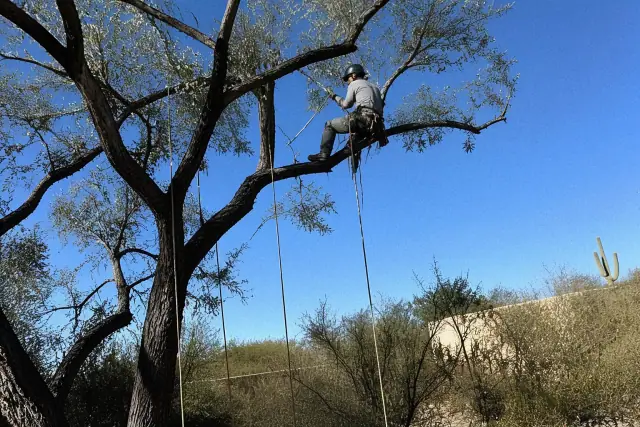
Arborist using climbing gear and ropes for structural tree pruning in a Tucson, AZ landscape.

Selective thinning reduces crossing growth and excess wind resistance while retaining enough interior foliage to support photosynthesis and shade the tree's bark. The finished canopy stays balanced instead of hollowed out.

Request Estimate

Deadwood and Hazard Limb Removal

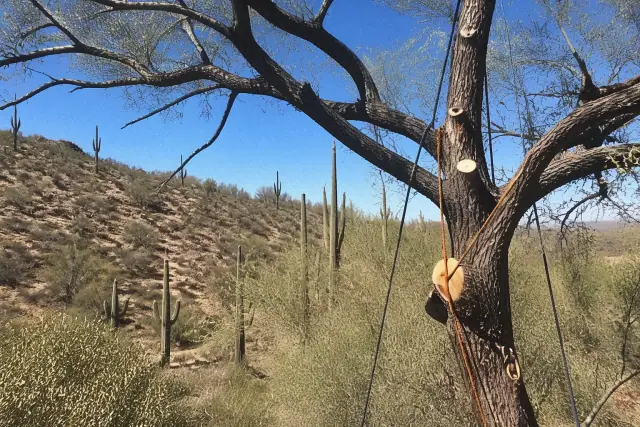
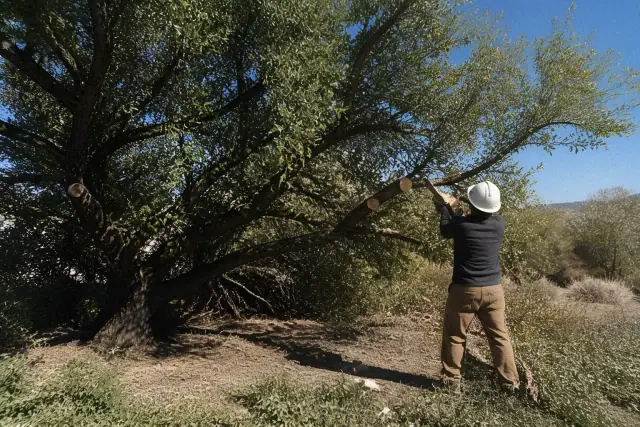
Arborist removing deadwood and hazard limbs from a tree canopy in a desert landscape in Tucson, AZ.

We identify dead branches, hanging debris, cracked unions, and weak attachments that could fail over a roof, driveway, fence, or walkway. Corrective cuts remove the immediate concern while preserving sound structure.

Request Estimate

Palm Tree Trimming

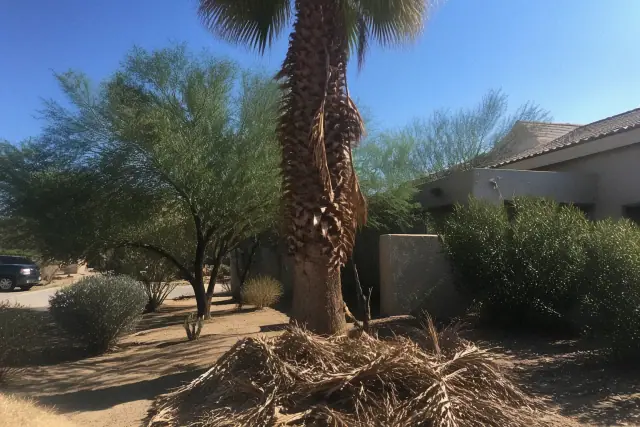
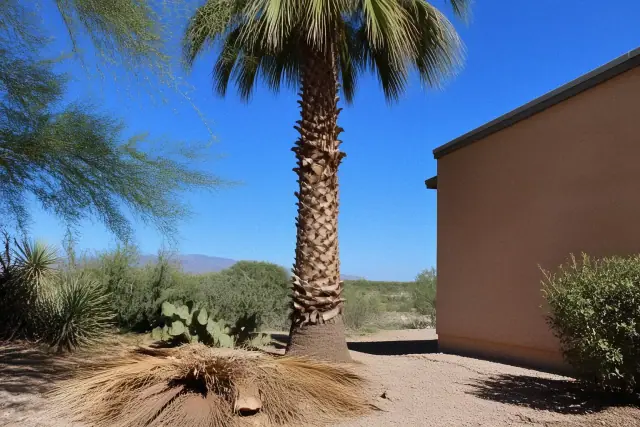
Tall palm tree with dead fronds being trimmed in a Sonoran desert landscape in Tucson, AZ.

Dead and dying fronds are removed close to the trunk without damaging growth nodes or stripping green fronds the palm still needs. Blade disinfection between trees helps prevent fungal cross-contamination.

Request Estimate

Native Tree Pruning

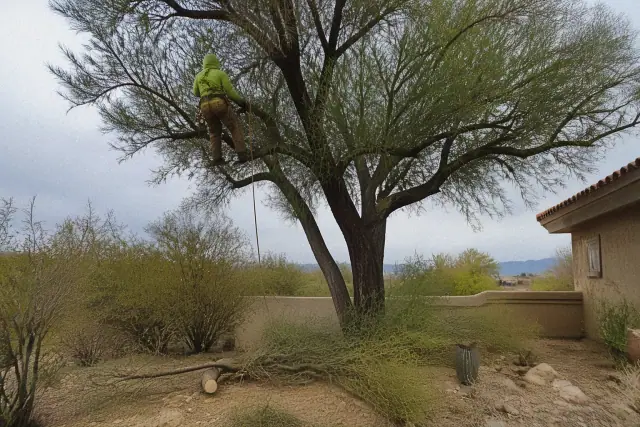
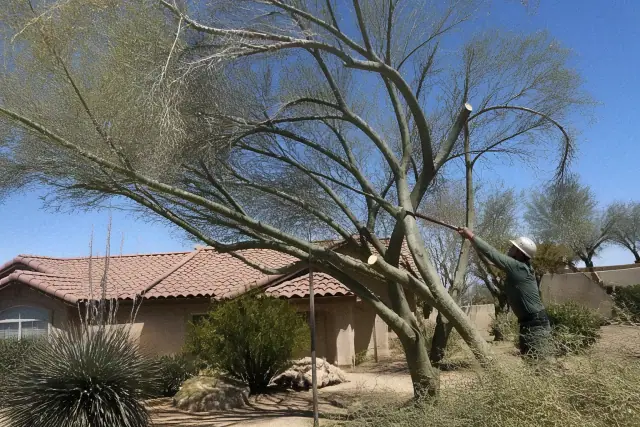
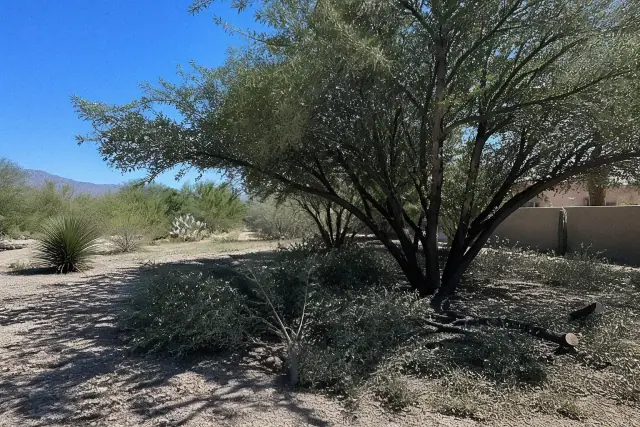
Mid-process pruning of a native tree crown with precision cuts and branch debris on the ground in Tucson, AZ.

Mesquite, palo verde, and oak species each require a different approach. We account for weak mesquite unions, brittle palo verde wood, shallow roots, and the deliberate deadwood and clearance work suited to landscape oaks.

Request Estimate

Storm-Damage Pruning and Cleanup

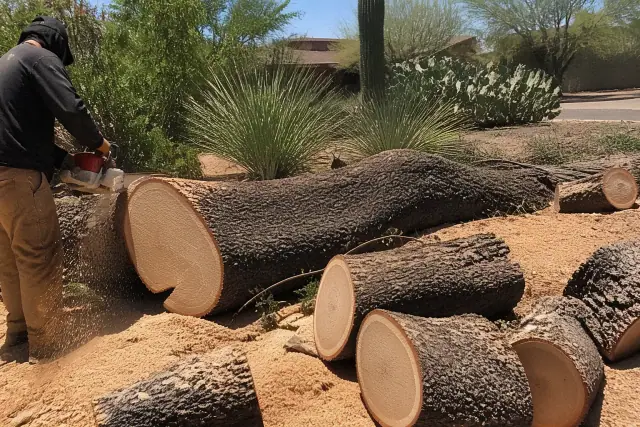
A fallen tree trunk being cut into logs during storm-damage cleanup in Tucson, AZ.

After a monsoon event, we secure the area, check for suspended debris, and make clean corrective cuts where limbs have broken. If the root plate has lifted or the trunk has split beyond saving, we can recommend full removal and stump grinding removal.

Request Estimate

Arborist Tree Health Consultations

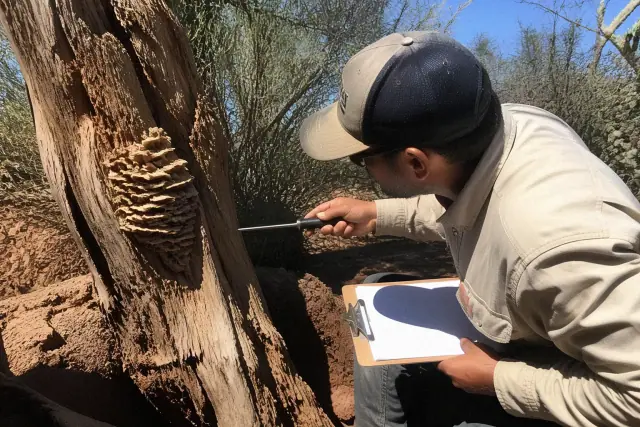
Arborist inspecting a tree with fungal growth and a soil probe in a Tucson, AZ desert landscape.

Property owners can request a tree health and risk evaluation without committing to pruning or removal. The assessment considers structure, root-crown issues, regional disease signs, site access, and the work needed for a written estimate.

Request Estimate
Species and Timing

Tree Pruning Approaches

The right approach depends on species, branch structure, heat exposure, seasonal stress, and whether the goal is planned maintenance or correction after a storm.

Precision pruning of a mesquite tree to restore its natural form in Tucson, AZ.

Mesquite Structure Training

Fast-growing mesquites can form weak, low-angle branch unions when their structure is not trained early. Selective pruning develops a stronger framework without stripping the canopy.

  • Selective thinning on young mesquites
  • Correction of weak, low-angle unions
  • Development of strong scaffold branching
  • Balanced growth for lower wind resistance
  • Structure intended to withstand decades of monsoon exposure
Request Estimate
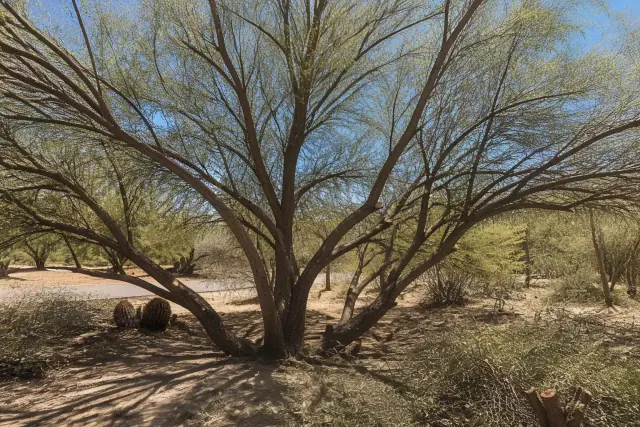
Palo Verde tree canopy balancing and pruning in Tucson, AZ, showing selective limb removal for tree health.

Palo Verde Canopy Balancing

Palo verdes combine brittle wood, shallow roots, and thin photosynthetic bark. Pruning must reduce lopsided growth while retaining protective canopy cover.

  • Removal of crossing branches
  • Balanced crown weight across the trunk
  • Reduced wind resistance in dense canopies
  • Extra care in saturated monsoon soil
  • Foliage retained to protect thin green bark
Request Estimate
Professional tree pruning of an oak tree with visible branch cuts and wood chips in a Tucson, AZ landscape.

Oak Deadwood and Clearance Pruning

Landscape oaks generally need less frequent but more deliberate work than fast-growing desert species. The focus stays on deadwood, clearance, and sound branch structure.

  • Deadwood removal from mature crowns
  • Canopy clearance near homes and walkways
  • Deliberate cuts instead of aggressive thinning
  • Care for shade trees around older Tucson homes
  • Species-aware work in Sam Hughes and Blenman-Elm
Request Estimate
A palm tree trunk after professional pruning with discarded fronds at the base in a Tucson, AZ desert landscape.

Palm Crown Management

Palm trimming uses different tools and techniques from broadleaf-tree pruning. The goal is to remove spent growth without weakening the living crown.

  • Dead and dying frond removal
  • Protection of trunk growth nodes
  • No aggressive hurricane-cut over-pruning
  • Blade sanitation to limit Fusarium wilt spread
  • Seed-pod management near roofs, lines, pools, and walkways
Request Estimate
Precision pruning on lower tree branches to restore canopy health in Tucson, AZ.

Seasonal and Storm-Response Pruning

Tucson's climate cycle determines how much pruning a tree can safely tolerate and when corrective work should take priority.

  • February through April for most major pruning
  • No heavy canopy reduction between May and September
  • Targeted deadwood removal before monsoon season
  • June through September storm-response planning
  • Clean corrective cuts within days of storm breakage
Request Estimate
Finding the Right Fit

Choosing the Right Pruning Approach

We match the work plan to the tree's species, health, branch attachments, canopy density, site access, utility clearance, and current season. A planned crown-thinning visit, a palm maintenance job, and a storm-damaged tree require different cut sequences, equipment, and safety controls.

ANSI A300 Pruning Standards

Every cut is planned against ANSI A300 pruning standards. We avoid topping, flush cuts, excessive live-canopy removal, and other shortcuts that can leave weak regrowth or exposed wood.

ISA Certified Arborist-Led Assessment

Lead climbers hold ISA Certified Arborist credentials and evaluate root-plate stability, vascular response, canopy structure, and regional disease signs before recommending work.

Property Protection and Complete Cleanup

Plywood or tarps protect turf, pavers, and irrigation lines beneath drop zones. Brush, limbs, and chips are hauled away, followed by a final blower cleanup around walkways and pool areas.

What Sets Us Apart

Why Choose Tucson Tree Service Co. for Tree Pruning?

Our approach combines desert-tree knowledge, commercial liability insurance, arborist credentials, and an on-site visual assessment. Estimates are free, written, and based on tree height, trunk diameter, canopy spread, access, and disposal volume rather than a flat per-tree guess.

Request Free Estimate

Monsoon Wind Load and Shallow Roots

Tucson averages around 12 inches of annual rainfall, so roots often spread wide and shallow in search of moisture. A dense or lopsided crown can become unstable when monsoon gusts regularly exceed 50 mph.

Sunscald After Over-Thinning

Removing too much foliage exposes south- and west-facing bark to direct summer sun. On desert-adapted trees, that heat can damage the cambium layer within a single season.

Lion-Tailed Canopies

Lion-tailing strips interior foliage and leaves growth at branch tips. The result shifts weight outward, increases the sail effect, and reduces the interior leaf mass the tree needs for photosynthesis.

Topping, Flush Cuts, and Stubs

Topping forces weak epicormic sprouts, while flush cuts and stubs interfere with natural wound closure. Damage from poor pruning may become visible as decline within one to two growing seasons.

Deadwood and Weak Branch Unions

Deadwood, included bark, cracked unions, and co-dominant stems can fail with little warning. A large limb may weigh hundreds of pounds, creating serious risk above roofs, vehicles, fences, and gathering areas.

Disease Spread on Pruning Tools

Contaminated blades can move fungal pathogens such as Fusarium wilt between palms. Clean tools and sharpened blades also reduce unnecessary wound area, while tree assessments check for regional concerns such as Texas root rot.

How It Works

Our Tree Pruning Process

Every job moves from diagnosis and safety planning to controlled cutting, property protection, and cleanup. The sequence is designed around the tree's condition and the space surrounding it.

01.

On-Site Walk-Around

We start by walking the tree and surrounding property before any saw work. This establishes the pruning goal, access limits, nearby structures, and visible hazards.

02.

Structure and Health Assessment

An arborist evaluates trunk taper, attachment angles, canopy density, included bark, cracked unions, root-crown issues, and disease indicators that may change the plan.

03.

Safety and Rigging Plan

We identify drop zones, utility-line clearance, rigging points, and any Tucson Electric Power right-of-way restrictions before setting the cut sequence.

04.

Precision Branch-Collar Cuts

Crews use bypass loppers, pole saws, or chainsaws matched to branch diameter. Each cut stays just outside the branch collar so the tree can compartmentalize the wound naturally.

05.

Property and Landscape Protection

Plywood or tarps cover vulnerable drop zones to help protect turf, pavers, irrigation lines, walkways, and pool areas while limbs are lowered.

06.

Debris Haul-Away and Final Cleanup

Brush, limbs, and chips are hauled away the same day rather than left to dry in the heat. A final blower cleanup clears green waste from access paths and work areas.

Plan Your Pruning

Schedule a Tree Pruning Consultation

Request a free on-site assessment for a written estimate based on your tree's size, species, condition, access, and disposal needs. We can also provide a tree health and risk consultation before you decide whether pruning or removal is appropriate.

Tree Pruning Help

Tree Pruning FAQs

These answers cover timing, pricing, pruning limits, property-line concerns, cleanup, palm care, and storm-damage decisions for Tucson trees.

Call Our Arborist Team

Late winter through early spring, roughly February through April, is the primary window for major pruning on most Tucson trees. Cooler temperatures reduce water stress and give cuts time to begin sealing before summer heat and monsoon winds. Summer visits are better suited to light corrective work or urgent storm response.

Typical Tucson ranges are about $112 to $150 for a small tree, $300 to $450 for a medium tree, and $900 or more for a large tree. Two-person crew labor across the local market averages roughly $120 to $150 per hour. Actual cost depends on species, height, canopy density, access, equipment, and disposal needs.

There is no universal free tree-cutting program specifically for Tucson seniors. Utility or municipal programs may occasionally address branches that interfere with power lines, but eligibility and availability vary. Check directly with the relevant utility or local agency before relying on a program.

A property owner is generally responsible for maintaining their own tree. A neighbor may generally trim branches back to the property line at their own expense as long as the work does not kill or seriously damage the tree. Document the overhang and communicate before cutting when ownership or tree condition is disputed.

The major mistakes are lion-tailing, topping, flush cuts, and removing more than 25 percent of the live canopy in a single season. These practices can shift weight outward, expose bark and heartwood, reduce photosynthesis, and trigger weak regrowth. Clean branch-collar cuts and a balanced canopy are safer goals.

The one-third rule says not to remove more than about one-third of a tree's live canopy in one session. For stressed or desert-adapted species, the draft recommends staying closer to 20 to 25 percent. Heavier removal can shock the tree and increase vulnerability to pests, disease, sunscald, and water loss.

Work should stay on your side of the property line unless the neighbor gives permission to enter their property. Arizona rules generally allow encroaching branches or roots to be cut back to the line only when the work does not kill or seriously damage the tree. Large, diseased, or structurally weak limbs call for careful documentation and qualified help.

Low rainfall, caliche soil, intense summer heat, and strong monsoon gusts influence both root stability and canopy stress. Pruning must reduce excessive wind resistance without removing the foliage that shades bark and supports photosynthesis. That balance is especially important for mesquite and palo verde.

Modern arborist practice generally leaves correct pruning wounds unpainted so the tree can compartmentalize them naturally. Paint or sealant can trap moisture against the wood. The important details are a clean cut just outside the branch collar and avoiding exposed stubs or flush wounds.

The estimate considers tree height, trunk diameter at breast height, canopy spread, site access, disposal volume, and whether crane or bucket-truck access is required. Palm trimming, cactus removal, and stump grinding removal may be priced separately because their equipment and disposal needs differ. Tucson Tree Service Co. provides the written estimate after a free on-site visual assessment.

Only dead and dying fronds should be removed close to the trunk without damaging growth nodes or stripping healthy green fronds. Avoid the aggressive hurricane cut because the living crown supplies energy and supports cold tolerance. Blades should be disinfected between palms to reduce the spread of Fusarium wilt.

Yes. Brush, limbs, and chips are hauled away, and the property receives a final blower cleanup. Plywood or tarps are used under drop zones to help protect turf, pavers, irrigation lines, walkways, and pool areas during the work.

A lifted root plate or a trunk split beyond saving can make full removal safer than attempting corrective pruning. A large structurally failed tree typically costs $1,800 to $4,200 to remove in Tucson, while a 40-foot mesquite or Aleppo pine may range from $1,800 to $5,000 depending on trunk diameter, nearby structures, access, and stump grinding. Proactive pruning over several years usually costs a fraction of removal after structural failure.