Deadwood and Canopy Cleaning
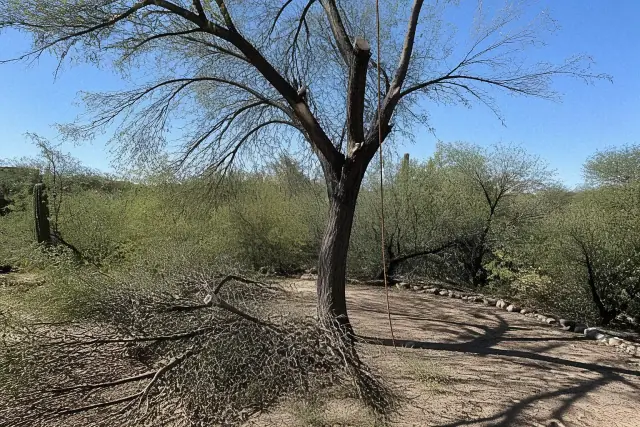
We remove dead and brittle branches, clean crowded interiors, and flag cracked limbs or weak unions that could fail over a walkway, patio, roof, or driveway.
Request Estimate
Tucson Tree Service Co. provides professional tree trimming for residential yards, HOA common areas, and commercial properties throughout Tucson, Arizona. Our crews handle canopy cleaning, deadwood removal, clearance cuts, structural pruning, crown thinning, palm trimming, and hazardous branch removal. We also provide tree removal, stump grinding, storm damage cleanup, cactus removal, tree planting, and tree health consultations across the metro area. Each trimming plan is matched to the tree's species, age, and growth pattern.
Tucson's 110-degree summers, flash flooding along washes, and fast wind gusts during the July and August monsoon season can expose weak limbs and overloaded canopies. Dry heat makes deadwood brittle, while saturated soil can let shifted root plates lose their grip after a storm. Our climbers and crew leads follow ANSI A300 pruning standards and ISA practices for cut placement, load reduction, and canopy structure. Bucket trucks and rigging gear handle standard access, while crane service supports large trees near structures, power lines, or tight lots.
As a family owned Tucson tree service, we understand local species from mesquite and palo verde in midtown to queen palms and saguaros in Oro Valley and Sahuarita. We protect established desert landscaping, irrigation lines, and native plants when planning rigging and drop zones. Free on-site estimates include a written quote with the proposed work explained before you decide.
Tucson Tree Service Co. provides tree trimming throughout Tucson and nearby areas, including Oro Valley, Marana, Sahuarita, Vail, Catalina Foothills, and the greater Pima County metro area.
Professional tree trimming removes deadwood, cleans crowded canopies, creates clearance around rooflines and power lines, and corrects developing structure in young trees. The goal is to improve safety, balance, and tree health without treating every species or property the same way.
Trimming generally shapes a canopy or reduces its overall size and density. Pruning is more targeted, removing selected branches to improve health, structure, or hazard clearance, and the arborist explains which approach fits the tree before cutting begins.
Work can include crown thinning, shaping, hazardous branch removal, palm frond removal, and clearance cuts over roofs, patios, and walkways. The crew chips and hauls debris on-site so branches are not left behind.
A consistent trimming cycle helps Tucson trees cope with dry heat, caliche soil, and monsoon downbursts. Selective cuts improve structure while retaining the live canopy a tree needs to handle drought and sun.
We tailor each trimming service to the tree's condition, location, and growth pattern. Residential yards, HOA common areas, and commercial properties can receive focused care ranging from routine canopy cleaning to complex clearance work.
We remove dead and brittle branches, clean crowded interiors, and flag cracked limbs or weak unions that could fail over a walkway, patio, roof, or driveway.
Request Estimate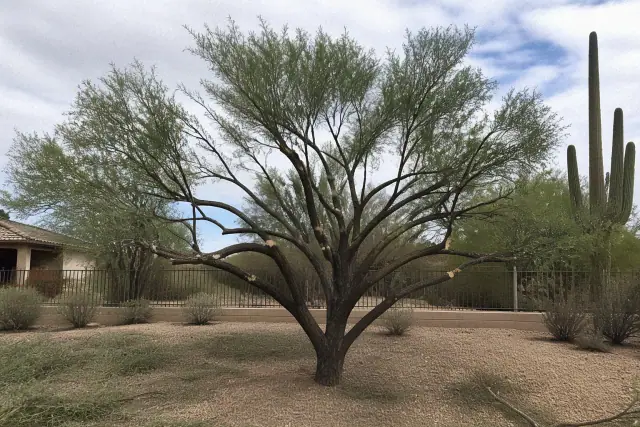
Targeted pruning corrects developing structure before weak unions and lopsided growth become larger problems. Cuts are placed at the branch collar to support proper wound closure.
Request Estimate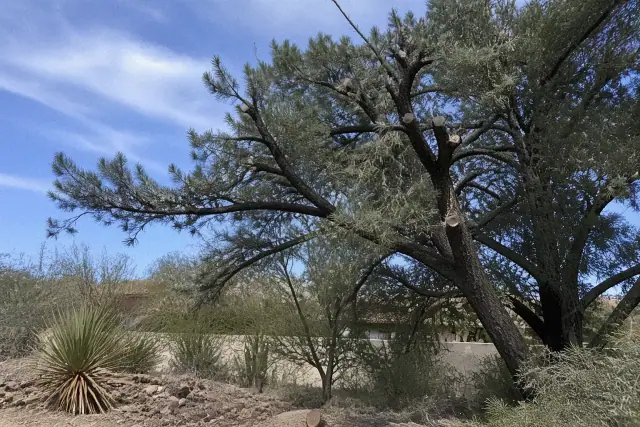
Selective thinning improves light and air movement while keeping the tree's overall form. It also reduces the dense canopy surface that catches monsoon winds.
Request Estimate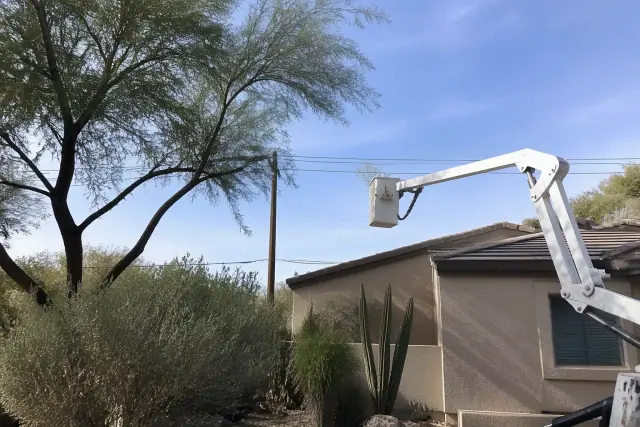
Clearance cuts keep branches away from rooflines, walkways, patios, and power lines. The crew plans access and controlled lowering around structures or tight lots.
Request Estimate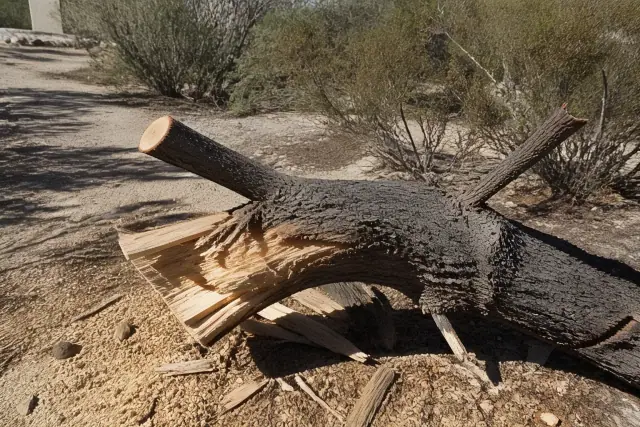
Cracked limbs, deadwood, and weak branch unions receive priority when they threaten people or property. The crew evaluates the branch and removes it with rigging when a free drop is not appropriate.
Request Estimate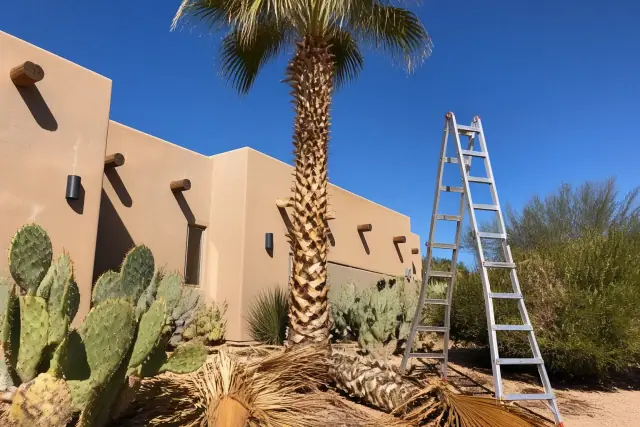
Palm care removes dead and hanging fronds without over-skinning the trunk. Enough green frond collar remains to protect the growing point and avoid permanent trunk damage.
Request EstimateThe right method depends on whether the tree needs cleaning, structural correction, wind-load reduction, clearance, or specialized palm care. Combining only the needed cuts helps preserve canopy function while addressing the reason for service.
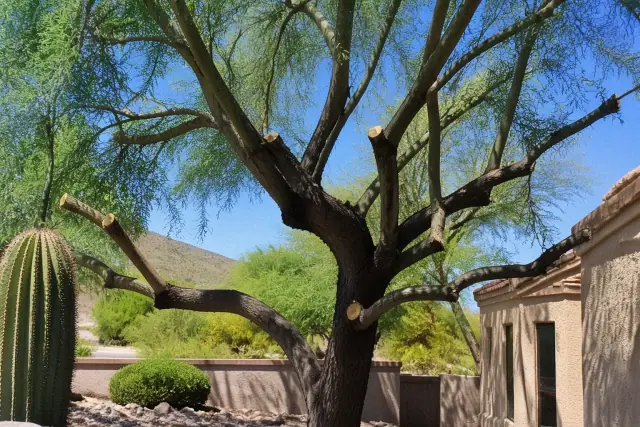
Canopy cleaning concentrates on dead, damaged, and hazardous branches while retaining healthy growth.
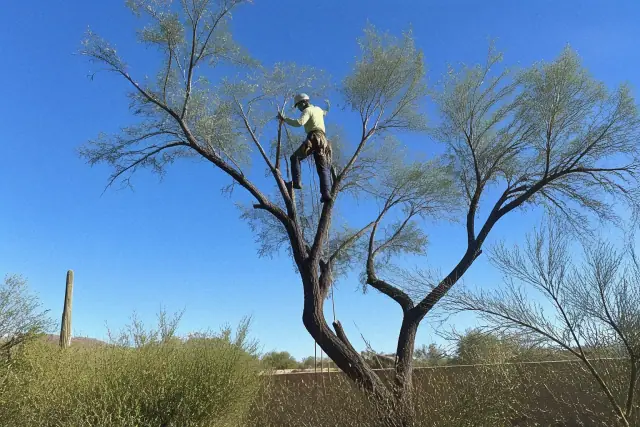
Crown thinning selectively opens a dense canopy without changing the tree's basic shape.
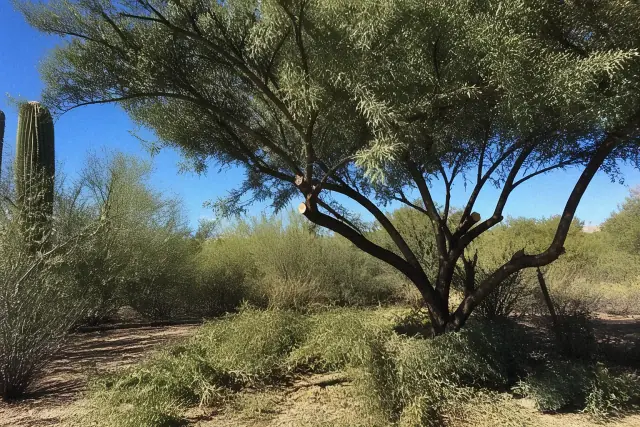
Structural pruning guides young or developing trees toward a stronger framework and addresses weak unions before they carry greater loads.
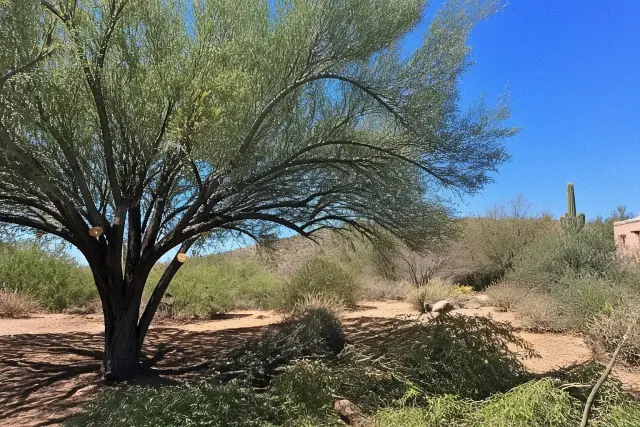
Clearance pruning targets branches that conflict with buildings, circulation areas, or utility corridors.
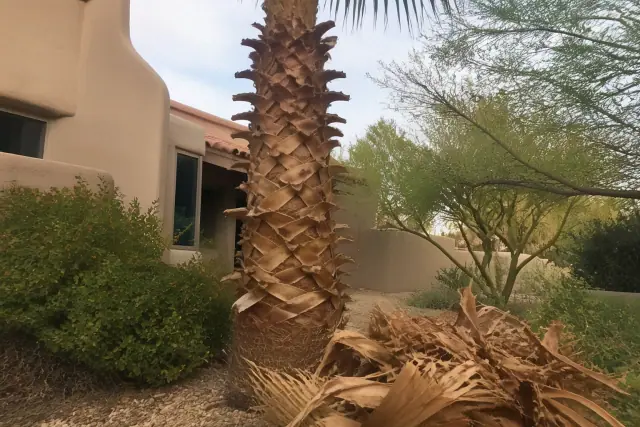
Palm trimming requires a different approach because palms do not heal trunk wounds like woody trees.
Tucson Tree Service Co. is a licensed and insured, family owned tree service whose tree health consultations and pruning plans are handled by an ISA Certified Arborist. Recommendations account for root health, canopy density, pest pressure, structural risk, species, site access, and the surrounding desert landscape.
Climbers and crew leads work from ANSI A300 pruning standards and ISA practices for cut placement, load reduction, and canopy structure. Arizona Department of Forestry and Fire Management guidance also informs conservative live-canopy removal.
The crew understands how Tucson heat, drought, caliche soil, and monsoon winds affect mesquite, palo verde, non-native pine, queen palm, and other local trees. That context guides timing and cut selection.
Bucket trucks, ropes, rigging gear, and crane service support work around structures, power lines, and tight Catalina Foothills lots. Drop zones are staged to protect drought-resistant plantings, irrigation lines, and established native trees.
Visible damage is not the only reason to schedule trimming. Dense, unbalanced, or poorly cut canopies can create wind load, clearance conflicts, and long-term health problems before a branch fails.
Request a Free EstimateTucson's dry heat makes dead branches increasingly brittle. Removing deadwood before it drops helps protect driveways, roofs, patios, and other target areas below.
Crowded canopies catch more force during monsoon downbursts. Selective thinning can reduce wind resistance while retaining the tree's overall shape.
Cracks in scaffold branches, split unions, and dead limbs throughout a canopy can signal structural risk. These conditions are flagged during each trimming visit.
Growth over rooflines, patios, and walkways creates clearance concerns and places branches above frequently used spaces. Targeted cuts create room without treating the entire canopy as a size-reduction job.
Removing too much live canopy stresses trees already coping with heat and drought. Flush cuts can also invite decay, while branch-collar cuts support more appropriate wound closure.
Dead palm fronds hold moisture and can become fuel or pest habitat. Careful removal avoids trunk over-skinning and protects the green frond collar around the growing point.
Each job moves from tree and site evaluation to a written scope, careful cutting, debris handling, and follow-up guidance. The process is adjusted for tree condition, access, structures, and surrounding landscaping.
The visit reviews root health, canopy density, pest pressure, structural risk, deadwood, cracks, and clearance needs before a trimming approach is recommended.
A free on-site estimate explains the proposed work, what hauling and chipping include, and the written price before work begins, with no obligation attached.
The crew identifies target zones, equipment access, rigging points, and protected landscaping. Tight sites or trees near structures may require roped sectioning or crane service.
Selected branches are cut at the branch collar using ANSI A300 and ISA practices. The work focuses on the identified health, structure, clearance, or wind-load goal.
Bucket trucks, ropes, and rigging control removed branches when they cannot be dropped freely. Material is chipped and prepared for hauling on-site.
The crew hauls trimming debris and leaves the work area clear. Recommendations may cover seasonal timing, tree health concerns, or whether fertilization, mulching, cable support, or bracing is appropriate.
Request a free on-site estimate for residential or commercial tree trimming in Tucson. You will receive a written quote explaining the recommended work, access needs, and included debris handling before you decide.
These answers cover trimming methods, timing, pricing factors, storm concerns, and related tree care in Tucson. A site visit is the best way to match the recommendation to a specific tree and property.
Call Our Tree TeamA two-man crew typically runs $120 to $150 per hour region-wide. Typical trimming ranges are $110 to $150 for a small tree under 25 ft, $300 to $450 for a medium tree from 25-50 ft, and $450 to $900 or more for a large tree over 50 ft. Height, canopy density, species, access, and included hauling or chipping determine the written quote.
Trimming generally shapes a tree or reduces overall canopy size and density. Pruning removes selected branches to improve tree health, structure, or hazard clearance, so the recommended term and method depend on what the tree actually needs.
November through February is the preferred window for structural pruning on most Tucson trees because cooler conditions reduce stress and pest activity. Spring can suit light shaping, while fall cleanup can address monsoon damage before winter dormancy.
A two-to-three-year cycle is a useful benchmark, and maintained trees tend to have fewer storm breaks than neglected ones. The actual interval should still reflect species, age, growth pattern, condition, and clearance needs.
A proper trim may include deadwood removal, canopy cleaning, roofline or power-line clearance, crown thinning, shaping, and structural correction on young trees. Removed branches are chipped and hauled on-site rather than left in a pile.
Arizona Department of Forestry and Fire Management guidance advises against removing more than 25 percent of a tree's live canopy in a single visit. Conservative pruning is especially important for trees already coping with Tucson heat and drought.
Leaning trunks, exposed root plates, fungal conks at the base, widespread dead limbs, cracked scaffold branches, split unions, and root plate movement all warrant assessment. The arborist determines whether targeted pruning, cable support or bracing, or removal is the appropriate response.
Palm trimming removes dead and hanging fronds while avoiding over-skinning of the trunk. The crew retains enough green frond collar to protect the growing point because palms do not heal trunk wounds like woody trees.
Tree trimming is available throughout Tucson, Oro Valley, Marana, Sahuarita, Vail, and the greater Pima County metro area. Service also extends to midtown and tight Catalina Foothills lots.
Some storm-damaged trees can be preserved through pruning, cable support, bracing, or stabilization. Root plate movement, trunk cracking, split unions, and the tree's ability to remain structurally sound determine whether preservation or removal is appropriate.
Yes. Tucson Tree Service Co. offers 24-hour response for trees down on structures, fences, or vehicles and for trees leaning dangerously after storms. Emergency crews bring rigging, chipping, and hauling equipment so removal and cleanup can happen in a single visit whenever conditions allow.
Grinding typically reaches 6 to 12 inches below grade, depending on how the area will be used afterward. When it is not included with removal, stump grinding usually adds a few hundred dollars based on stump diameter, and root removal beyond the grind zone is available for sucker growth or surface-root heaving.
A basic medium removal from 25-50 ft is typically listed at $600 to $1,800, while a 40-foot Tucson removal can run $1,800 to $4,200 depending on species, trunk diameter, and access. A 40 to 50-foot tree requiring crane service near a structure can reach $3,000 to $5,000. Small trees under 25 ft are typically $150 to $450 to remove, while large trees over 50 ft are $1,800 to $4,200 or more.