Proudly serving Tucson, Oro Valley, Marana, Catalina Foothills, Casas Adobes, Sahuarita & surrounding areasCall or Text 24/7: 520-569-2093

Tree Removal & Desert Landscape Maintenance in Catalina, AZ

Tree removal, tree trimming, tree pruning, and stump grinding for Catalina homes and businesses are core services from Tucson Tree Service Co. Our crews also handle emergency tree service, storm cleanup, palm trimming, cactus removal, tree health consultations, and tree planting. We evaluate the species, root condition, lean, and nearby structures before recommending work. From tight desert lots to larger acreage, we plan the service around the property and the tree.

Caliche can restrict root penetration and leave mature trees with shallow, unstable root systems. Summer highs regularly exceed 100 degrees, while isolated monsoon microbursts can exceed 60 mph. Those conditions can turn weak limbs, compromised root plates, and storm debris into hazards for roofs, driveways, vehicles, and fences. A site-specific assessment helps determine whether pruning, treatment, stabilization, or removal is the appropriate next step.

Call for a free on-site estimate, a same-day quote, or help assessing a storm-damaged tree in Catalina.

★ ★ ★ ★ ★4.9/5 Average Rating - 20+ Years of Experience - Catalina Tree Service Company Specialists - Residential & Commercial
Tree Care Services

Tree Services Available in Catalina, AZ

Service extends across Catalina proper, Catalina Foothills, Golder Ranch Estates, Saddlebrooke, Oracle Junction, and surrounding unincorporated Pima County. Crews also work in the larger pockets stretching toward Oro Valley, AZ along the Oracle Road corridor. Whether the site is a half-acre foothills property or several acres of desert scrub, access, nearby structures, and local requirements shape the plan.

Tree Removal

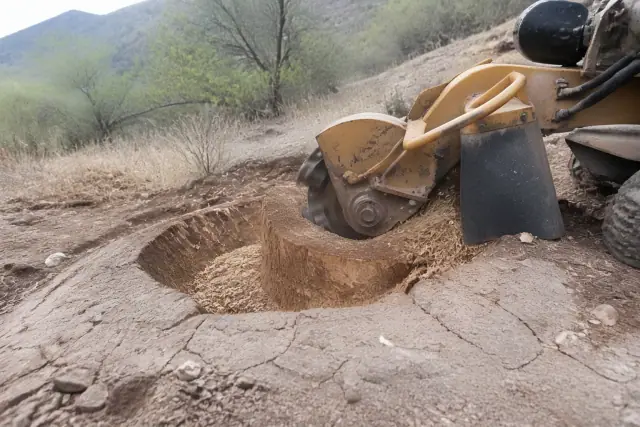
A stump grinder pulverizing a tree stump into mulch in the Sonoran Desert foothills of Catalina, AZ.

Dead, hazardous, storm-damaged, and oversized trees are evaluated for species, root structure, lean angle, and target zones before cutting begins. Depending on clearance, the crew can use open felling, sectional dismantling, rigging, or crane support, followed by chipping, log hauling, and debris cleanup.

Explore Service

Tree Trimming

An arborist performing precision pruning on a tree crown in the rugged desert landscape of Catalina, AZ.

Crown and canopy trimming reduce wind resistance while creating clearance around rooflines, driveways, and power lines. Technique and equipment are adjusted for each tree, from ornamental landscape species to a 40-foot pine exposed to monsoon gusts that regularly exceed 50 mph.

Explore Service

Tree Pruning

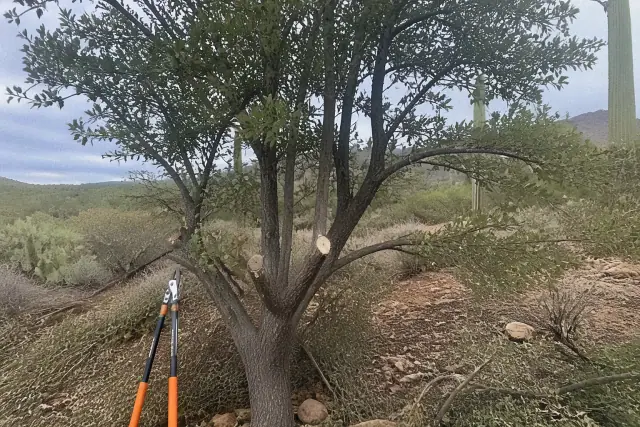
Pruning shears and fresh cuts on a tree canopy in the Sonoran desert landscape of Catalina, AZ.

Pruning targets specific limbs for structure and tree health rather than canopy shape alone. Structural, ornamental, and fruit-tree cuts follow ANSI A300 practices and are placed just outside the branch collar to support proper closure without leaving decay-prone stubs.

Explore Service

Stump Grinding & Removal

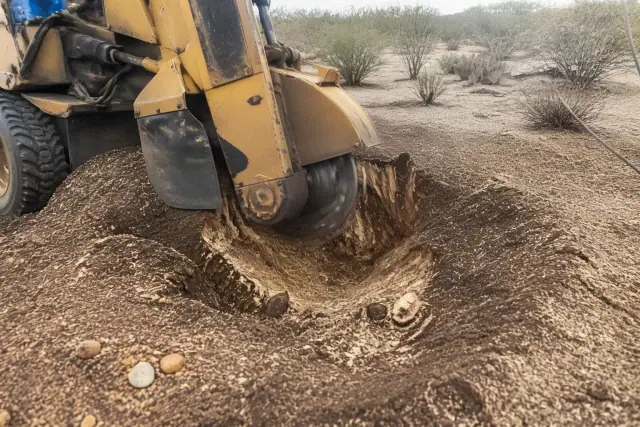
Heavy machinery grinding a tree stump into mulch in the Sonoran desert soil of Catalina, AZ.

Stump grinding clears the surface for replanting, hardscaping, gravel, or decomposed granite without the disruption of full root excavation. Wood chips can be hauled away or left on-site for mulch, according to your preference.

Emergency Tree Service

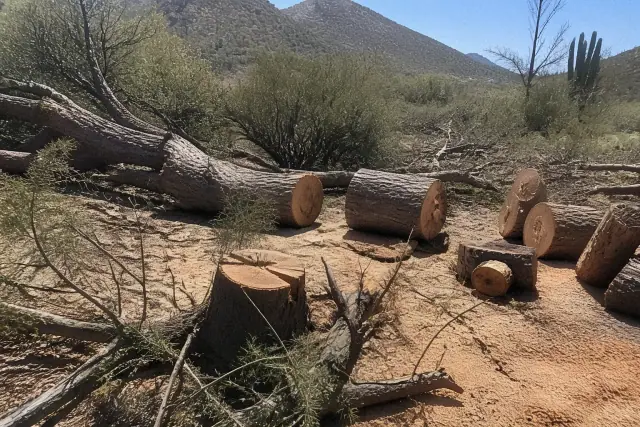
Worker clearing wood debris from a downed tree after a storm in the Sonoran Desert in Catalina, AZ.

Emergency service addresses downed limbs, split trunks, trees resting on roofs or vehicles, blocked access, and standing trees that have become structurally unstable. The crew assesses weight distribution and immediate targets before controlled cutting, rigging, stabilization, or removal.

Storm Damage Cleanup

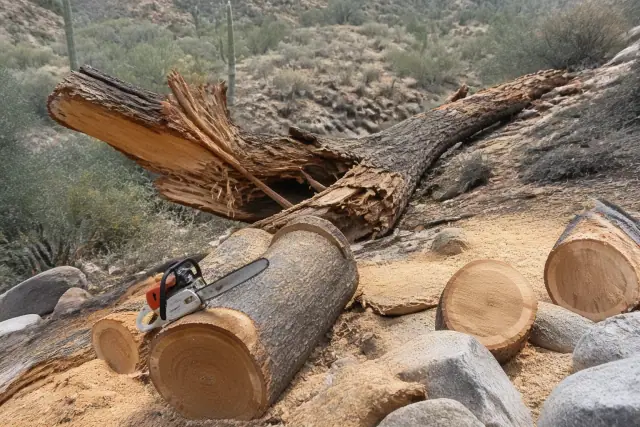
A fallen tree trunk being cut into logs during storm damage cleanup in Catalina, AZ.

Storm cleanup starts with immediate safety hazards, then moves to hauling downed limbs and trunk sections, chipping smaller debris, and inspecting nearby standing trees. Follow-up assessment can reveal cracked interior wood or a compromised root plate that may not be obvious after the first wind event.

Palm Tree Trimming

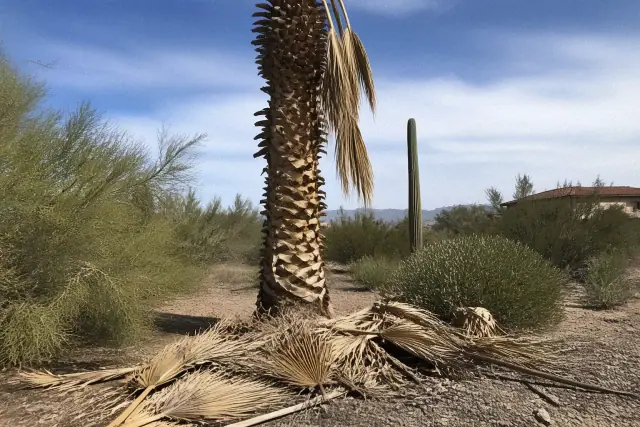
A worker trimming dead fronds from a tall palm tree on a desert property in Catalina, AZ.

Palm trimming removes dead fronds, seed pods, and excess boots that can become fire fuel or falling hazards. Palms are skirted and shaped without stripping healthy green fronds or cutting into the trunk, both of which can stress the tree and increase pest vulnerability.

Cactus Removal

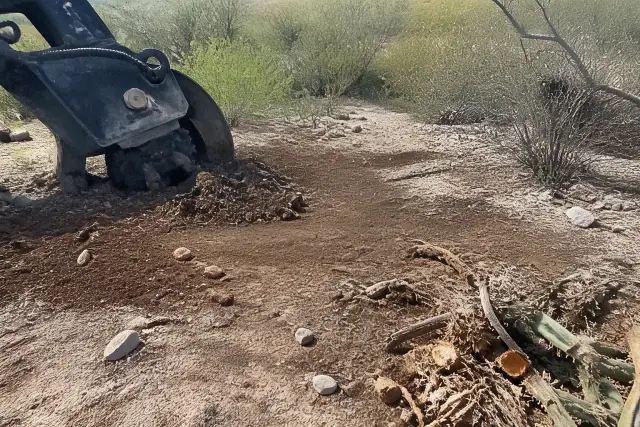
Cactus remains and disturbed soil from a removal project in the Sonoran desert of Catalina, AZ.

Cactus work includes removal, relocation, and disposal of oversized or damaged columnar species and overgrown prickly pear stands. Because saguaros are protected under Arizona native plant rules, the species and applicable handling requirements are checked before cutting or relocation.

Tree Health & Arborist Consultation

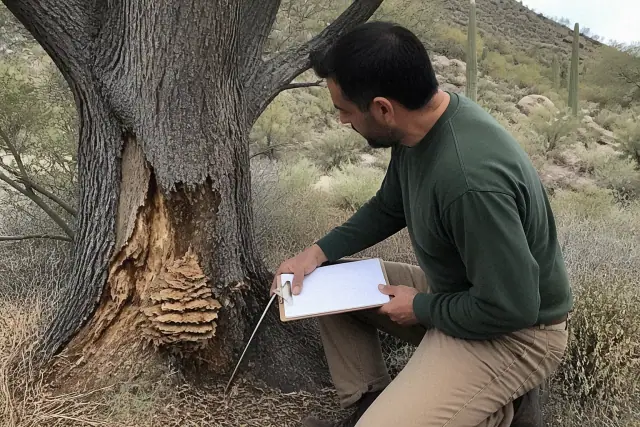
An arborist inspects tree trunk decay and fungal growth with a soil probe in Catalina, AZ.

A tree health consultation examines canopy density, bark condition, root-crown health, pest pressure, disease, structural defects, and drainage-related stress. Findings support a practical recommendation for monitoring, pruning, treatment, removal, or fire-safety planning near structures.

Tree Planting

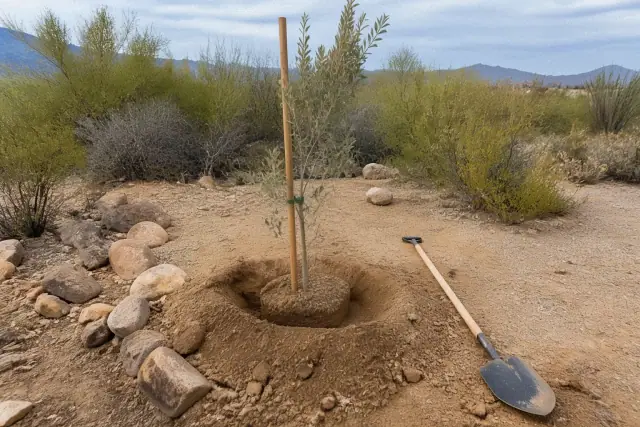
Technician backfilling soil around a newly planted tree in the arid landscape of Catalina, AZ.

Tree planting begins with soil, drainage, sun exposure, mature canopy spread, and watering needs. Native choices such as palo verde, mesquite, and ironwood generally handle Catalina's caliche and drought stress better than many imported ornamentals when planted at the proper depth.

Planning Tree Work

How to Choose the Right Tree Care for Your Property

The right service depends on the tree's condition, the goal for the property, and the consequences of branch or root failure. Species, access, nearby targets, soil, and cleanup preferences all influence whether the plan calls for pruning, treatment, planting, grinding, or complete removal.

Species & Site Evaluation

Begin with the species, canopy condition, bark, root crown, lean, and surrounding soil. A site evaluation separates a tree that can respond to pruning or treatment from one whose defects make removal the safer recommendation.

Access & Removal Method

Open space may allow directional felling, while roofs, fences, pools, power lines, and neighboring property can require sectional dismantling. Tight access may also change the need for rigging, crane support, hauling, and crew size.

Pruning Goal & Standards

Clearance trimming, canopy shaping, and health-focused pruning solve different problems. The selected cuts should match the goal, retain sound structure, and follow proper branch-collar placement rather than leaving stubs or stripping the canopy.

Desert-Ready Maintenance

Deep watering, structural pruning, and pest monitoring help address shallow rooting and prolonged drought stress. Maintenance should reflect the species, maturity, proximity to structures, and the property's exposure to foothills wind.

Cleanup Preferences

Decide whether wood chips should be hauled away or retained as mulch and whether trunk rounds should remain for firewood. Confirming those preferences before work keeps the final cleanup aligned with how you use the property.

Clear Pricing Factors

Tree height, trunk diameter, species, access, target zones, and the need for rigging or crane support shape removal cost. A written on-site estimate defines the scope before work begins, while stump grinding can be included or scheduled separately.

Catalina Tree Hazards

Common Tree Problems on Catalina Properties

Catalina's transition from low desert toward higher-elevation woodland creates a mix of native and imported species with different roots, growth patterns, and failure points. Recognizing the site-specific cause of a problem helps avoid unnecessary removal and focuses work on the actual hazard.

Request Hazard Assessment

Shallow Roots in Caliche

Hardpan calcium carbonate can restrict penetration and drainage, forcing roots to spread near the surface. Once topsoil is saturated, that shallow root plate may provide less anchoring against wind.

Monsoon Microburst Damage

Monsoon season runs roughly from mid-June through September, bringing sudden gusts that can snap weak limbs or topple poorly anchored trees. Wash-adjacent lots can also channel broken branches and other debris toward structures or access routes.

Drought & Pest Stress

Extended drought can weaken bark and reduce a tree's ability to resist bark beetles and borers. Thinning foliage, bark changes, and declining branch tips are reasons to inspect the canopy, trunk, and root crown before damage advances.

Trees Crowding Structures

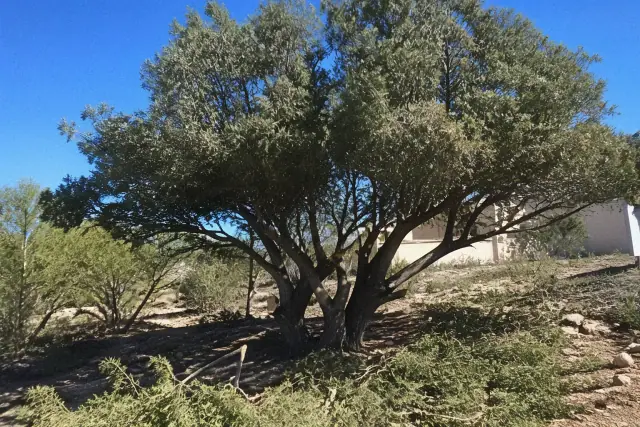
Mature mesquite and pine can press into rooflines, foundations, septic systems, fences, or overhead lines when their original placement did not account for canopy and root spread. Clearance and structural condition should be assessed together before trimming or removal.

Aging Non-Native Trees

Some Aleppo pines and eucalyptus planted 20 or 30 years ago now struggle in rockier, fast-draining soil or have outgrown their available space. Brittle limbs, poor anchoring, and crowding make species knowledge important when deciding between corrective care and removal.

Wash & Storm Debris

Open lots and washes can collect or move limbs, trunk sections, and loose vegetation after a storm. Cleanup needs to restore driveways and emergency access while checking nearby standing trees for damage that could fail during the next wind event.

Why Choose Us

Why Choose Tucson Tree Service Co. in Catalina?

Tree work in this foothills corridor requires attention to desert-native species, imported ornamentals, rural access, county requirements, and monsoon exposure. Tucson Tree Service Co. combines local site knowledge with documented work planning, arboricultural practices, and full debris cleanup.

Licensed & Insured Crew

The company carries general liability insurance and operates under the Arizona licensing requirements applicable to tree service work. Proof of insurance is available before removal, trimming, pruning, or storm cleanup begins.

Catalina Species Experience

Crews work with mesquite, palo verde, ironwood, saguaro, pine, oak, eucalyptus, palms, and residential fruit trees across Catalina and the surrounding foothills. That range helps them account for species-specific growth, roots, failure patterns, and pruning needs.

ANSI & ISA-Aligned Practices

Pruning follows ANSI A300 guidance, while chainsaw, aerial, and rigging operations follow ANSI Z133 safety practices. ISA-aligned tree-risk and species-care principles inform recommendations without treating every declining tree as an automatic removal.

Simple Process

Our Tree Service Process in Catalina

Each project moves from assessment and written scope to controlled work and final cleanup. The sequence is adjusted for the service, site access, nearby targets, and whether the tree can be treated or pruned instead of removed.

01.

On-Site Tree Assessment

The crew evaluates species, height, lean, root condition, canopy health, and proximity to roofs, power lines, pools, fences, or septic fields. That assessment identifies immediate hazards and the practical service options.

02.

Written Scope & Estimate

A written estimate explains the planned work and reflects tree size, access, complexity, cleanup, and any rigging or crane support. The scope is reviewed before cutting begins.

03.

Work Zone & Drop Plan

The crew establishes a work zone, protects nearby targets, and identifies controlled drop or lowering paths. Equipment and crew placement are matched to the available access.

04.

Controlled Cutting

Open sites may allow directional felling, while constrained sites use sectional dismantling with controlled pieces. Pruning work uses goal-specific cuts that preserve sound canopy structure.

05.

Chipping & Hauling

Branches and smaller wood are chipped on-site, and trunk sections are cut into manageable rounds. Debris is hauled away unless you request mulch chips or firewood-sized rounds to remain.

06.

Final Cleanup & Follow-Up

The work area is cleared, and stump grinding can be completed with the removal or scheduled separately. After storm work, remaining trees can be checked for cracks, root movement, or other hidden damage.

Practical Results

Tree Care Outcomes for Catalina Properties

Case Study 1: Safer Clearance: Selective canopy work can reduce weight and wind resistance while restoring space around roofs, driveways, fences, and overhead lines.

Case Study 2: Clean Removal Sites: Sectional dismantling, chipping, hauling, and stump grinding can prepare a site for gravel, hardscaping, replanting, or normal use.

Case Study 3: Healthier Long-Term Growth: Proper pruning cuts, suitable planting depth, deep watering, and pest monitoring support trees that remain appropriate for the site.

Plan Your Tree Work

Schedule a Tree Service
Estimate in
Catalina

Request a free on-site estimate for tree removal, trimming, pruning, stump grinding, storm cleanup, or another supported tree-care need. The visit provides a clear scope based on the tree, access, nearby structures, and cleanup preferences.

Catalina Tree Service Help

Tree Service FAQs for Catalina, AZ

These answers cover costs, permits, timing, cleanup, maintenance, and common hazard questions for Catalina properties. A site visit is still the best way to evaluate a specific tree and access conditions.

Call Our Tree Crew

Most removals in the Tucson and Catalina area fall between $450 and $1,500 per tree, with a common midpoint around $750. Smaller ornamental trees under 30 feet often cost $150 to $450, while access, diameter, species, and equipment needs can increase the final estimate.

Arizona tree removal can range from roughly $200 for a small, accessible tree to $2,000 or more for a large or complex removal. Protected cactus handling, tight access, structures, and specialized equipment can change the scope and price.

Trees around 60 to 80 feet tall or with a trunk diameter of 24 inches or more may fall near the $1,000 range when sectional dismantling and added labor are needed. Large, difficult removals can run from $1,000 to $2,000 or more, and tight access may cost more than open crane access.

Some seniors may qualify for free or reduced-cost help when a dead or dying tree creates a clear public or utility hazard. Those programs are generally offered through county assistance or utility providers rather than private tree services, so eligibility and availability vary; the crew can discuss the situation during a free estimate.

Most tree removals on private residential property in unincorporated Pima County do not require a permit, but saguaros and certain native plants are covered by Arizona native plant protection rules. HOA requirements may also apply, so species, location, and property rules should be checked before work begins.

Most residential removals in Catalina take between 2 and 6 hours, while a large tree needing a crane or sectional dismantling can take a full day. Stump grinding typically adds another 30 minutes to an hour when included.

Branches are chipped on-site, and trunk sections are cut into manageable rounds and hauled away as part of standard cleanup. You can ask to keep wood chips for mulch or firewood-sized rounds on the property.

Yes. Tucson Tree Service Co. carries general liability insurance and operates under the Arizona licensing requirements applicable to tree service work, and proof of insurance is available before a job starts.

Yes. Hazard and emergency tree work begins with an assessment of lean, weight distribution, target zones, and structural risk before controlled sectional cutting or rigging is selected.

Trimming shapes a canopy for appearance, clearance, or reduced wind resistance. Pruning targets selected branches for structural or biological health and uses precise cuts near the branch collar under ANSI A300 practices.

Most established shade and ornamental trees benefit from trimming every 2 to 3 years, while faster-growing trees or those near structures may need annual attention. Palms typically need frond removal once a year, and fruit-tree pruning follows the species' seasonal cycle.

Yes. Tree planting includes a review of drainage, sun exposure, planting depth, watering needs, and mature canopy spread, with native options such as palo verde, mesquite, and ironwood considered for caliche soil and drought conditions.

Emergency service can include fallen-tree removal, limbs removed from roofs, vehicles, or fence lines, stabilization of compromised standing trees, and restoration of blocked access. Immediate hazards are addressed first, followed by debris cleanup and inspection of nearby trees.

Stumps are typically ground 4 to 6 inches below the surrounding soil line so gravel, decomposed granite, sod, or another surface can cover the area. Grinding is less invasive than full excavation and can reduce disturbance to nearby roots or irrigation lines.

A tree health consultation every 1 to 2 years is recommended for mature trees on Catalina properties, especially where drought, pests, caliche, or monsoon exposure affect condition. An earlier inspection is appropriate after a major storm or when bark, canopy, or root-crown changes appear.