Proudly serving Tucson, Oro Valley, Marana, Catalina Foothills, Casas Adobes, Sahuarita & surrounding areasCall or Text 24/7: 520-569-2093

Tree Removal & Specialized Tree Care in Catalina Foothills, AZ

Tucson Tree Service Co. provides complete tree care for homeowners and property managers across Catalina Foothills. Our crews handle tree removal, tree trimming, tree pruning, stump grinding and removal, and emergency tree service. We also provide storm damage cleanup, palm tree trimming, cactus removal, tree health consultations, and tree planting. Each recommendation is matched to the species, property layout, and desert conditions affecting the tree.

Decomposed granite, caliche layers, steep washes, drought stress, and monsoon microbursts create risks that require foothills-specific planning. Brittle mesquite limbs, weakened palo verde crowns, and unstable saguaros can threaten rooflines, walls, pools, vehicles, and access routes. We assess lean, root exposure, trunk condition, canopy weight, and nearby structures before work begins. That preparation helps us choose a safer method while limiting disturbance to the surrounding desert landscape.

From the Skyline and Sunrise corridors through Finger Rock, Sabino Canyon, Ventana Canyon, and the River Road business district, we bring the rigging, chippers, grinders, and cleanup plan the site requires.

★ ★ ★ ★ ★4.9/5 Average Rating - 20+ Years of Experience - Catalina Foothills Tree Service Company Specialists - Residential & Commercial
Complete Tree Care

Tree Services in Catalina Foothills, AZ

We match each service to the tree species, site access, soil conditions, and the damage or maintenance need at hand. Owners comparing conditions elsewhere in the Tucson basin can also review our tree-care information for Casas Adobes, AZ .

Tree Removal

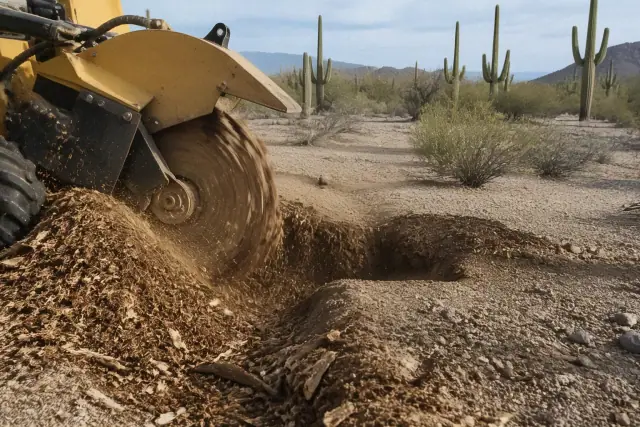
Stump grinder pulverizing a tree stump into mulch in the Sonoran desert of Catalina Foothills, AZ.

We remove dead, hazardous, and mature trees for residential and commercial properties. On tight lots near pools, walls, rooflines, or steep drop-offs, sectional cutting and rope rigging can control the removal more safely than a straight felling cut.

Explore Service

Tree Trimming

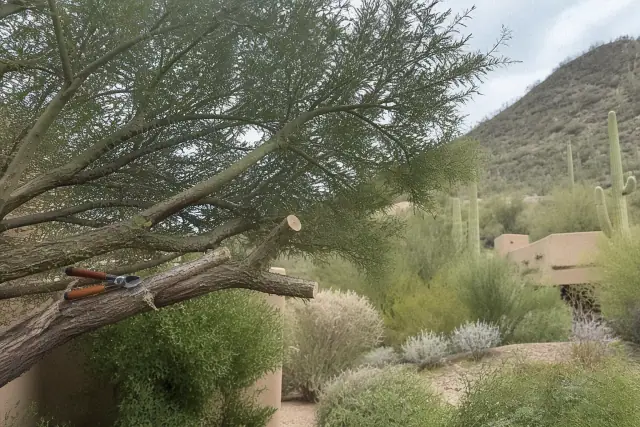
Precision pruning on a tree crown with desert landscape and stucco homes in Catalina Foothills, AZ.

Monsoon gusts regularly top 50 mph in this corridor, turning dense mesquite, palo verde, and eucalyptus canopies into wind sails. Trimming typically runs every 1 to 3 years by species and growth rate, with interior thinning, crossing-limb removal, and correction of lopsided growth near block walls.

Explore Service

Tree Pruning

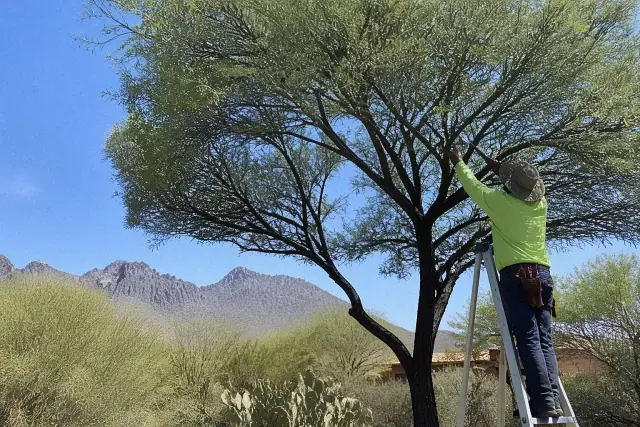
Contractor pruning a tree to restore its natural form in Catalina Foothills, AZ, with mountain scenery in the background.

Structural pruning follows ANSI A300 standards for cut placement, timing, and safe canopy reduction. We prune for roofline and power-line clearance, monsoon strength, and a native tree's natural form while removing no more than about 25 percent of live canopy in one visit.

Explore Service

Stump Grinding & Removal

Heavy machinery grinding a tree stump into mulch in the desert landscape of Catalina Foothills, AZ.

We grind stumps 4 to 6 inches below grade so the area can be replanted, paved, or covered with decomposed granite. Grinding is generally less disruptive than full excavation in caliche, and the grindings can be hauled away or left on-site as mulch.

Emergency Tree Service

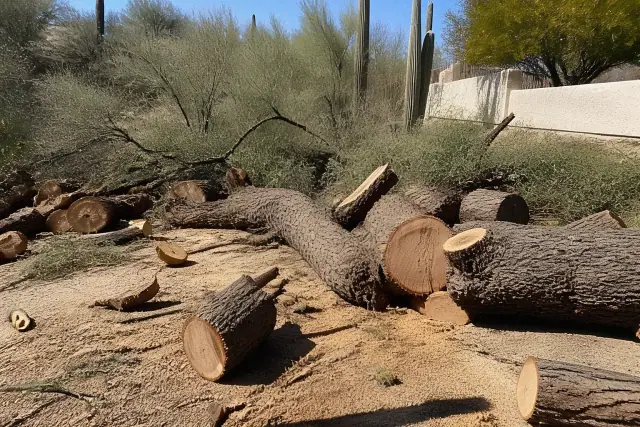
Logs from a fallen tree being sectioned by a chainsaw on a residential property in Catalina Foothills, AZ.

We prioritize hazard calls involving a split trunk, blocked driveway, roofline impact, vehicle, structure, or power line. Emergency work receives the same controlled rigging and thorough debris cleanup used on scheduled removals.

Storm Damage Cleanup

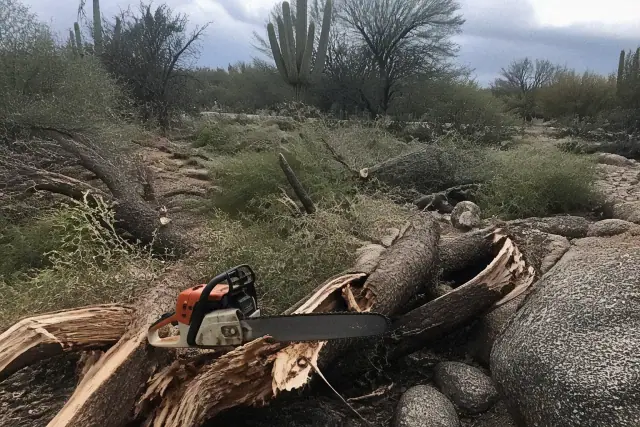
Chainsaw resting on a split tree trunk during storm damage cleanup in Catalina Foothills, AZ.

Monsoon season, typically mid-June through September, drives the largest share of foothills storm-damage calls. After clearing downed limbs, split trees, and debris, we assess the remaining trees for torn bark, cracked co-dominant stems, and other hidden damage that may fail in the next windstorm.

Palm Tree Trimming

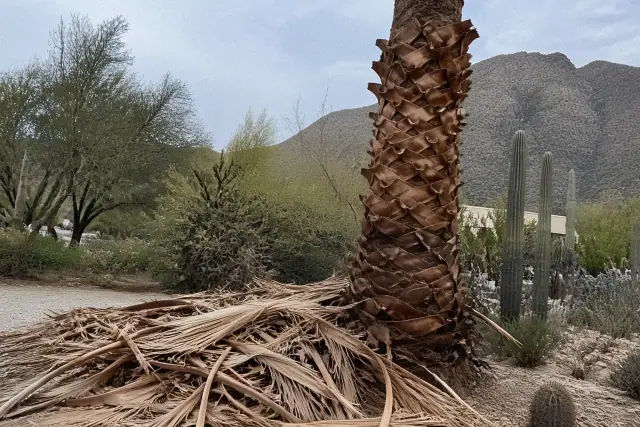
A pile of trimmed palm fronds at the base of a tall tree with mountain views in Catalina Foothills, AZ.

Annual palm trimming removes dead fronds that can become falling hazards, add fire exposure, and harbor rodents or pests. We skirt and shape palms around driveways and pool decks without stripping healthy green fronds that support crown growth.

Cactus Removal

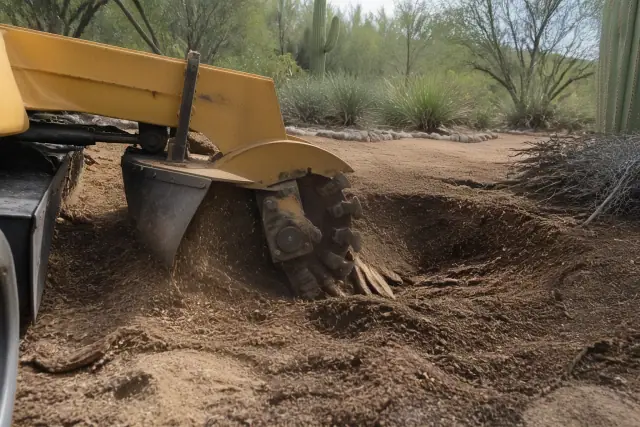
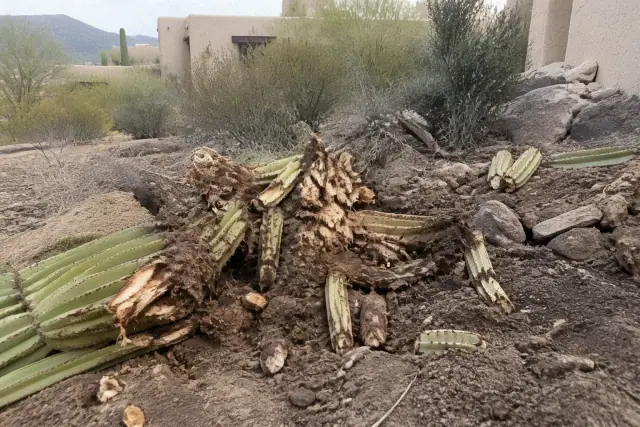
Cactus removal in progress with soil disturbance and desert terrain in Catalina Foothills, AZ.

Saguaros and other protected native columnar cacti require notification to the Arizona Department of Agriculture before removal, relocation, or destruction on private property. We handle that step and use padded slings and careful cutting methods; smaller prickly pear and cholla do not require the same notification but still demand safe handling.

Tree Health & Arborist Consultation

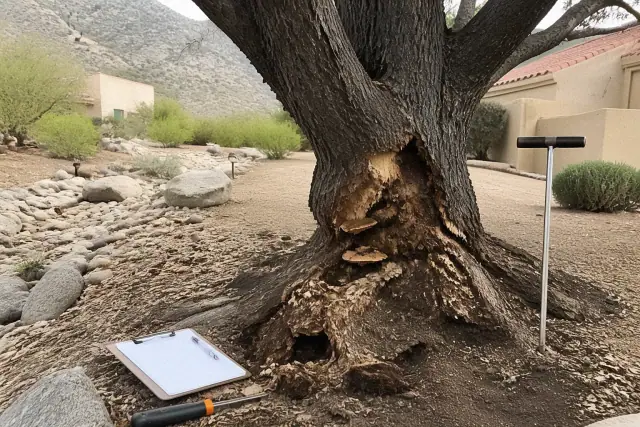
Arborist inspection of tree trunk decay and fungal growth at a residential property in Catalina Foothills, AZ.

A tree health consultation considers trunk lean, root-plate condition, canopy balance, decay, drought stress, soil, and exposure to nearby structures. We flag concerns such as crown weakness, root-zone erosion, torn bark, and buffelgrass encroachment so property owners can plan the appropriate care.

Tree Planting

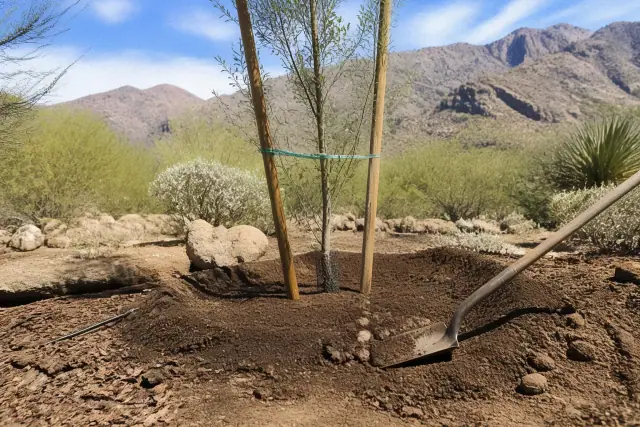
Technician backfilling soil around a newly planted sapling in Catalina Foothills, AZ with desert mountains in the background.

We plant low-water native and desert-adapted choices such as palo verde, desert willow, ironwood, and mesquite according to soil and sun exposure. Correct depth and staking are especially important where shallow caliche layers push roots sideways and can create instability later.

Choosing Tree Care

How to Choose the Right Tree Service for Your Property

The right approach depends on the species, its condition, the terrain, access, nearby structures, and the outcome you want. A careful plan should address the tree and the finished site, including protected-plant requirements, rigging, debris handling, and stump work when needed.

Site and Species Assessment

Start with the tree's species, lean, root exposure, trunk decay, and canopy weight. A mature mesquite, eucalyptus, palo verde, palm, or saguaro presents different failure patterns and calls for a different care or removal method.

Sectional Rigging Plan

Sloped and canyon-adjacent lots often leave no safe path for felling a tree whole. Sectional cutting and rope rigging provide more control around pools, block walls, roofs, utility lines, and steep drop-offs.

Desert-Smart Pruning Limits

Pruning should improve clearance, airflow, structure, or natural form without stripping the canopy. This is particularly important for native species that can decline after over-pruning or unnatural shearing.

Root-Zone and Drainage Review

Caliche can trap water around roots while decomposed-granite slopes shed it quickly, creating sharply different conditions on the same property. A sound recommendation accounts for runoff, saturation, erosion, exposed roots, and irrigation lines before cutting or grinding begins.

Cleanup and Stump Plan

Decide whether the stump should be ground, whether chips will remain as mulch, and how larger debris will leave the property. Planning those details early helps protect surrounding roots and irrigation while leaving the area ready for its next use.

Protected Cactus Requirements

Before moving or removing a protected native cactus, confirm the Arizona Native Plant Law notification requirement. Proper planning also covers padded lifting, cutting technique, and protection of the pulp and root system during relocation.

Foothills Tree Risks

Common Tree Problems for Foothills Properties

A 40-foot mesquite failing onto a wall or vehicle shows why routine inspection matters in this terrain. Drought, sudden saturation, wind, erosion, pruning damage, and invasive grass can each weaken a tree or increase the consequences of failure.

Request Tree Assessment

Monsoon Wind Damage

Microbursts can snap brittle mesquite limbs, split co-dominant stems, and pull over canopies that have become wind sails. Torn bark and concealed cracks may remain after debris is cleared, leaving damage that warrants a second look.

Drought-Stressed Roots

Long dry stretches weaken root systems and can contribute to crown decline in saguaros and palo verdes. When moisture returns suddenly, compromised roots may not hold a large canopy securely, and failure can occur with little warning.

Caliche and Poor Drainage

Caliche layers can hold water at the root zone after heavy rain, then limit deeper root growth during dry weather. Shallow roots often spread sideways, increasing long-term instability when the tree, planting depth, or staking is poorly matched to the site.

Erosion Around Root Zones

Average annual rainfall in this part of Pima County is around 12 inches, concentrated heavily in the July through September monsoon window. Rapid runoff through steep washes and decomposed-granite slopes can expose or undermine roots even though the yearly total is modest.

Over-Pruned Canopies

Removing too much live growth is a common cause of long-term decline on foothills properties. Native mesquite and palo verde generally benefit from selective structural cuts that preserve natural form instead of severe thinning or shearing.

Buffelgrass Fire Exposure

Invasive buffelgrass around tree bases is a growing fire concern in wildland-urban interface areas near Sabino Canyon and the Coronado National Forest boundary. We flag encroachment during consultations so it can be considered alongside dead fronds, deadwood, and other combustible material.

Why Choose Us

Why Choose Tucson Tree Service Co. for Foothills Tree Care?

Tree work on multi-acre lots, canyon-view properties, and dense desert landscapes requires careful judgment about access, rigging, soil, and native plants. Our approach centers on safety, minimal disturbance to the surrounding landscape, and cleanup that leaves the work area graded and clear.

Foothills Terrain Experience

The lower slopes of the Santa Catalina range combine steep washes, decomposed granite, caliche, walls, pools, and restricted equipment access. We plan the cutting and material path around those conditions instead of treating the property like a flat valley lot.

Arizona Native Plant Compliance

Protected saguaros and other native columnar cacti receive the required Arizona Department of Agriculture notification before work begins. Relocation and removal plans also account for safe lifting, pulp protection, and reduced disturbance to the root system.

Safety-First Cleanup

The same safety standard applies from the first cut through the final load of debris. Smaller brush can be chipped on-site, larger material can be hauled away, and the work area is left clear with the surrounding desert landscape in mind.

Simple Process

Our Tree Removal Process in Catalina Foothills

A clear removal plan protects people, structures, access routes, utility lines, and the surrounding desert landscape. We move from assessment and compliance checks through controlled cutting, stump work, debris handling, and a final site cleanup.

01.

Assess the Tree and Site

We inspect trunk lean, root-plate condition, canopy weight distribution, decay, and proximity to structures, walls, access points, and utility lines. The assessment determines whether removal, pruning, or another tree-care option fits the condition.

02.

Confirm Native Plant Requirements

Most residential removals on private property in Pima County do not require a permit. When a protected native species such as saguaro is involved, we file the required notification before cutting.

03.

Plan the Cut and Rigging

We choose between a straight felling cut and sectional removal based on space, slope, lean, and nearby targets. Canyon-adjacent lots and tight yards typically call for rope rigging that controls each section as it comes down.

04.

Section and Lower the Tree

Larger trees are cut into manageable sections and lowered through the planned work zone. The crew adjusts the sequence around rooflines, walls, pools, drop-offs, and sensitive desert plants rather than forcing a single drop path.

05.

Grind, Chip, and Haul

After the tree is down, the stump can be ground on request, smaller brush can be chipped on-site, and larger debris can be hauled for disposal. Grindings may be removed or left as mulch according to the property owner's preference.

06.

Grade and Clear the Site

We finish by clearing loose debris and leaving the site graded for replanting, paving, decomposed granite, or its existing use. On storm jobs, we also review nearby trees for cracks or torn bark that may not have been obvious during the first cleanup.

Practical Outcomes

Tree-Care Outcomes for Foothills Properties

Case Study 1: Controlled removal: Sectional rigging can move a hazardous tree through tight space near a pool, wall, roofline, or canyon edge without relying on a straight drop.

Case Study 2: More resilient canopy: Selective trimming removes crossing limbs and reduces wind resistance while preserving the natural form and healthy live growth of desert trees.

Case Study 3: Usable finished area: Stump grinding, brush chipping, debris hauling, and grading can prepare the site for replanting, paving, or decomposed-granite cover.

Plan Your Tree Care

Schedule a Tree
Service
Assessment

Tell us about the tree, the property, and what has changed. We can assess the condition, explain the appropriate service, and plan around access, structures, soil, protected plants, and cleanup needs.

Tree Care Help

FAQs About Tree Service in Catalina Foothills, AZ

These answers cover common questions about removals, trimming, stumps, native cacti, storm work, planting, and service coverage in the foothills.

Call Our Tree Care Team

A strong lean, exposed or shifting roots, trunk decay, a split stem, dead canopy, or a major dropped limb can indicate elevated risk. We assess the root plate, trunk, canopy weight, and nearby structures before recommending removal.

A typical trimming schedule is every 1 to 3 years, depending on the species and growth rate. The goal is to remove crossing or hazardous limbs and improve airflow without stripping healthy canopy.

Stumps are ground 4 to 6 inches below grade so the area can be replanted, paved, or covered with decomposed granite. Grindings can be hauled away or left on-site as mulch.

Most residential removals on private property in Pima County do not require a permit. Protected native species such as saguaro require notification under the Arizona Native Plant Law before cutting, relocation, or removal.

Stump grinding is available on request, smaller brush can be chipped on-site, and larger debris can be hauled for disposal. The site is then cleared and graded for its existing use, replanting, paving, or ground cover.

Monsoon season typically runs from mid-June through September and is the main period for downed limbs, split trees, and wind-related damage. After cleanup, remaining trees should be checked for cracked stems, torn bark, and other concealed damage.

Caliche can trap water near the root zone after heavy rain and prevent roots from growing deeply. Roots may spread sideways instead, making correct planting depth, staking, drainage, and long-term canopy management especially important.

Planting options include low-water native and desert-adapted species such as palo verde, desert willow, ironwood, and mesquite. The choice and installation plan are matched to soil, sun exposure, planting depth, and staking needs.

Yes, but saguaros are protected by the Arizona Native Plant Law, so the required notification must be completed before work begins. Relocation uses padded slings and careful handling to protect the pulp and root system.

Yes. The work described includes residential tree removal and commercial tree service, ranging from a single backyard tree to multi-tree clearing on canyon-view, estate, and commercial properties.

We cover the full Catalina Foothills census-designated place, an unincorporated Pima County community of roughly 50,796 residents. Coverage includes the Skyline and Sunrise corridors, Finger Rock, Sabino Canyon, Ventana Canyon, and the River Road business district, as well as bordering Tucson neighborhoods and Oro Valley.

Priority hazards include trees or limbs affecting structures, vehicles, power lines, rooflines, and blocked access. Split trunks and trees down across driveways also call for controlled removal and debris cleanup.

Dead fronds can fall during wind events, increase fire exposure, and create harborage for rodents and pests. Annual trimming removes that buildup while preserving healthy green fronds around the crown.

The evaluation considers trunk lean, root-plate condition, canopy balance, decay, drought stress, soil, erosion, and proximity to structures or utility lines. It can also flag torn bark, cracked stems, and buffelgrass encroachment near tree bases.

Sectional cutting and rope rigging control the tree in smaller pieces when a straight drop is unsafe or impossible. This method fits sloped or canyon-adjacent lots and tight spaces near walls, pools, rooflines, utility lines, and desert plants.