Typical Price Range
The statewide average is $175-$450 per tree, but the broader Arizona range extends from $90 to $670 as height, species, and access change.
Tucson Tree Service Co. explains why palm trimming in Arizona typically ranges from $90 to $670 per tree, while most Tucson jobs fall between $150 and $450. Height, species, crown density, access, and debris volume determine where a tree lands within that range.
The statewide average is $175-$450 per tree, but the broader Arizona range extends from $90 to $670 as height, species, and access change.
Tall crowns require more rigging or aerial-lift time, while dense date and queen palms take longer than smaller pygmy palms. Tight side yards and nearby utilities can further increase the work involved.
Confirm whether the price covers fronds, seed pods, fruit stalks, trunk or skirt work, equipment access, and full debris haul-away before approving the job.
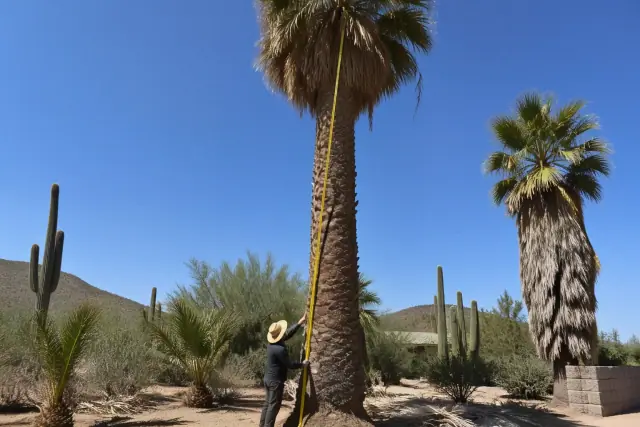
The full tree beside a clear height reference. Accurate crown height explains the equipment and crew needed for the quote.
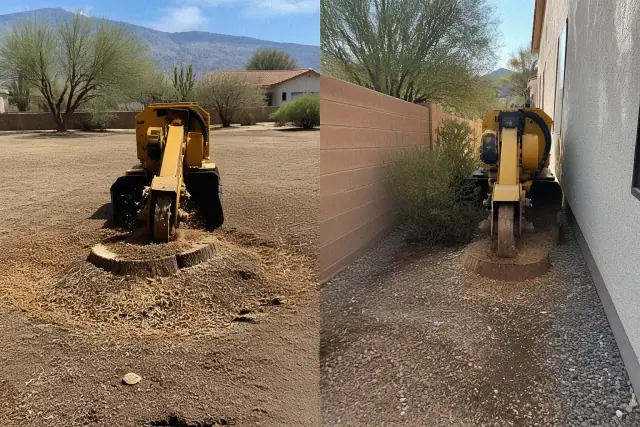
Compare a freestanding palm with one beside a pool, block wall, roof, or overhead utility line. Restricted access changes equipment placement and debris handling.
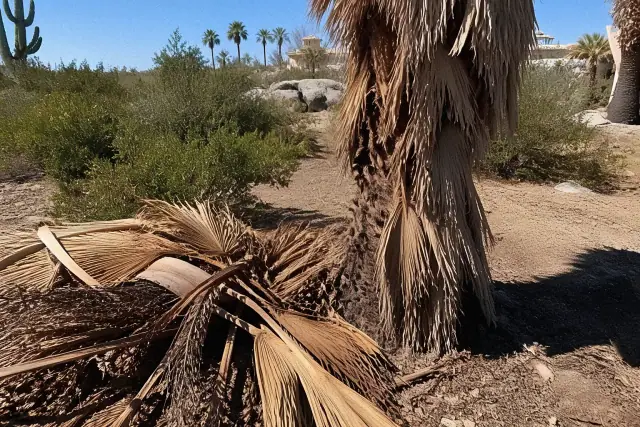
The crown and trunk closely enough to reveal the material that must be removed. Several seasons of buildup add weight, disposal volume, and clearing time.
A 20-foot palm typically costs $100-$200, with species, frond density, and access determining the final figure.
At 30 feet, expect $200-$350 per tree; trunk cleaning or skirt removal can add another $30-$75.
A 40-foot palm generally costs $300-$450, with open front-yard access costing less than a crown near a wall or utility line.
Removing dead fronds without a full trim typically runs $50-$150 per tree, depending on the accumulated volume.
| Tree Height | Typical Cost Range | Common Quote Factor |
|---|---|---|
| Under 20 ft | $75-$175 | Species and frond density |
| 20-30 ft | $150-$250 | Ladder, short lift, or climbing access |
| 30-40 ft | $200-$350 | Bucket-truck or climbing setup |
| 40-60 ft | $300-$500 | Rigging and controlled debris handling |
| Over 60 ft | $500-$900+ | Extended reach and larger crew needs |
A typical quote combines labor, climbing or bucket-truck equipment, frond and fruit-stalk removal, and green-waste disposal; labor alone may represent 40%-60% of the bill. Because palm crowns may sit 20-80 feet above grade, crews may need rigging, fall protection, and controlled debris handling. For 60-foot-and-taller palms, the work can require extended-reach equipment and a two- or three-person crew, so confirm whether trunk cleaning and skirt work are included or itemized separately.
Height is the largest factor because taller palms need more rope work, rigging, or aerial-lift time. Trunk diameter, crown fiber density, and species matter too: date and queen palms generally take longer than pygmy palms because their fronds and skirts are larger or denser. Pools, roofs, block walls, power lines, and narrow side yards restrict access, while heavy seed pods and several seasons of dead growth increase labor and disposal weight. Specialized bucket trucks can represent a six-figure equipment investment, which helps explain why tall-palm work is priced differently from ground-level hedge trimming.
For timing, late winter through spring, roughly February through May, is the preferred Arizona window before monsoon winds and fruit-stalk development; urban palms commonly need annual attention. For taller trees, a 60-foot palm generally runs $500-$900 or more, while multiple-palm properties may receive lower per-tree pricing when equipment setup is shared. If dead fronds droop below horizontal, seed stalks form, or skirt buildup becomes heavy, service may be needed before the usual seasonal visit. Hazardous vegetation can also draw local property-code attention, so current city or county requirements should be checked directly rather than assumed.
Share the number of palms, approximate heights, species if known, access limits, and clear photos of the crowns and surrounding property. An itemized estimate should separate trimming, seed-pod removal, trunk or skirt work, equipment access, and disposal before work begins.