Proudly serving Tucson, Oro Valley, Marana, Catalina Foothills, Casas Adobes, Sahuarita & surrounding areasCall or Text 24/7: 520-569-2093
Guides

Are There Legal Restrictions on Removing Cacti in Arizona ?

Tucson Tree Service Co. explains that removing a cactus in Arizona is not automatically illegal, but the answer depends on whether the plant is protected, where it is growing, and whether it will be destroyed on site or transported. Arizona provides a private-land destruction process and an exception for qualifying residential property, while taking or transporting a protected plant from its original growing site generally requires a permit and applicable tags or seals.

Quick Summary

  • Arizona's protected group covers listed native plants growing wild on public, state, or private land; exact botanical classification governs, and human-propagated or cultivated plants generally fall outside that definition unless specifically included.
  • When private-land notice applies, it is due at least 20 days before work on less than one acre, 30 days for one to under 40 acres, or 60 days for 40 acres or more; section 3-904 exempts individually owned residential property of 10 acres or less where initial construction has occurred.
  • Taking or transporting a protected native plant from its original growing site generally requires a permit; moving or salvaging a saguaro over four feet tall has specific permit, tag, and seal requirements.
  • A standard one-time permit costs $7 and a saguaro tag costs $8; dry, dead cactus skeletal wood is not protected, although landowner permission still matters when material is removed from someone else's property.

Three Checks Before Cactus Removal

Protected Cactus Status

Do not identify protected status by a common name alone. Arizona uses botanical names and official categories for wild-growing native plants, which can include saguaro, barrel cactus, cholla, prickly pear, ocotillo, yucca, and other listed species.

Species, Condition, and Intended Work

Identify the species, determine whether it is wild-growing, cultivated, alive, or only dry skeletal wood, and decide whether it will stay on the property or be transported. Those facts determine whether the next action is private-land notice, a movement permit with tags or seals, or ordinary handling with landowner permission.

Permit and Paperwork Check

For on-site destruction by a private owner, first determine whether the residential-property exception applies; if not, confirm that notice was submitted and the waiting period has elapsed after state confirmation. For movement, verify the Arizona Department of Agriculture permit, tag, seal, or applicable prior-movement documentation before equipment touches the plant.

What to Inspect Before Removal

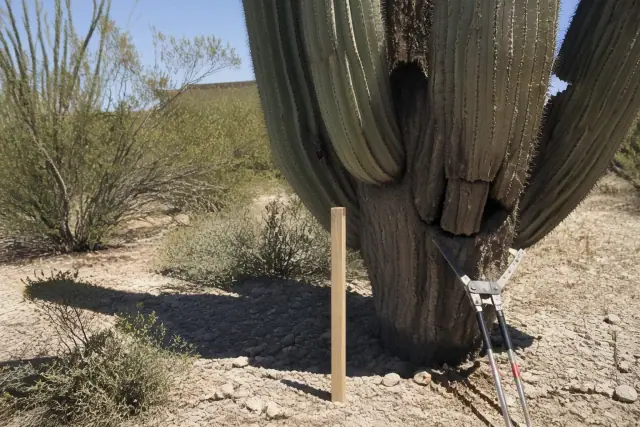
Protected Native Plant Identification in a Tucson Yard

Technician examining trunk decay on a tree in a Tucson, AZ yard with a Saguaro cactus and desert landscaping nearby.

This image helps make exact species identification the focus before any cutting or digging. Common names are not enough because Arizona's protected plant lists are governed by botanical names.

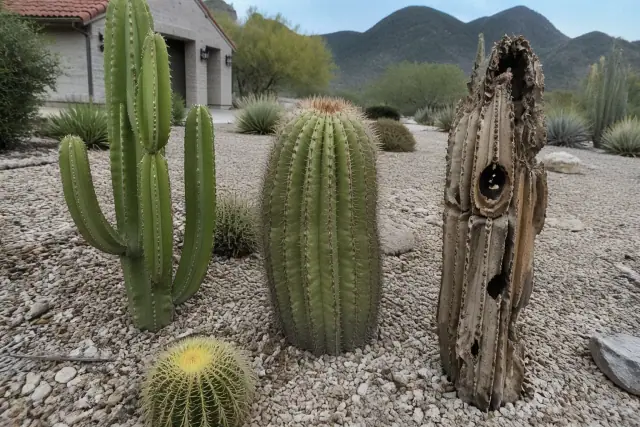
Wild-Growing, Cultivated, and Dead Cactus Comparison

A specialist inspects cactus health and trunk decay in a Tucson, AZ desert garden with mountain views.

A wild-growing live cactus, a deliberately cultivated specimen, and dry skeletal cactus wood as distinct cases. Legal status depends on more than appearance, so property history and botanical identification still need confirmation.

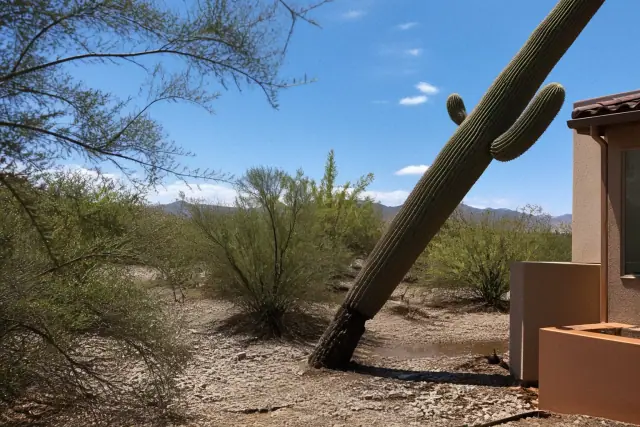
Leaning Saguaro Near a Structure After a Monsoon

A leaning saguaro cactus stands near a tree in a desert landscape with creosote bushes after a monsoon in Tucson, AZ.

The lean, nearby structure, and saturated shallow root area without depicting removal underway. A visible hazard calls for a safe work zone and prompt coordination, but it does not by itself reveal whether notice, a permit, or another exception applies.

Arizona Cactus Removal Snapshot

Best First Check

Confirm the botanical species, whether it grew wild or was cultivated, who owns the land, and whether the plant will leave its original site. The Arizona Department of Agriculture administers the protected lists, private-land notices, permits, tags, and seals.

What Changes the Rule

Protected classification, wild-growing versus cultivated status, live versus dead condition, intended destruction or transport, parcel acreage, landowner consent, and documented prior movement can all change the procedure. A saguaro over four feet tall also has specific movement and salvage rules.

When to Act

When the private-land notice rule applies, submit notice at least 20 days ahead on less than one acre, 30 days ahead on one to under 40 acres, or 60 days ahead on 40 acres or more, and wait for written confirmation. A leaning or fallen cactus near a structure calls for prompt hazard control and direct coordination before work proceeds; a mature root-balled saguaro can weigh well over a ton.

What to Avoid

Do not assume that owning the property eliminates state notice rules, or that a plant can be transported without movement documents. Avoid hand-pulling cactus because spines and root barbs remain hazardous, and incomplete removal can leave a dangerous stump or root system.

Cactus Removal Planning Matrix

Cactus situationWhat Arizona law requiresBest next action
Protected plant on individually owned residential property of 10 acres or less where initial construction has occurredThe private-land destruction notice requirements in section 3-904 do not apply, provided the plant is not being taken or transported under a different rule.Confirm the property qualifies and determine whether the plant will leave the site.
Protected plant destroyed on other private land and not transported or soldWhen section 3-904 applies, notify the state at least 20, 30, or 60 days beforehand based on acreage, then wait for confirmation and the applicable period.Confirm the parcel size, submit notice, and keep the plant on the property.
Protected plant taken or transported from its original growing siteA permit and applicable tags or seals are generally required; moving or salvaging a saguaro over four feet tall has specific permit, tag, and seal rules.Confirm the exact species and obtain authorization before moving it.
Saguaro with records of a previous legal moveArizona Revised Statutes 3-906 may allow movement without a new permit, tag, and seal when the required documentation is maintained or held by the department.Locate and verify the prior paperwork before relying on the exception.
Dry, dead cactus skeletal woodCactus wood is not protected by the native plant law, but permission is still needed to enter or remove material from someone else's land.Document landowner permission and plan for safe handling.

What Arizona Law Means

Arizona's Native Plant Law appears in Arizona Revised Statutes Title 3, Chapter 7 and distinguishes on-site destruction from taking or transporting a plant. Section 3-904 allows a private landowner or agent to destroy protected plants that are not transported or offered for sale after the applicable notice and waiting period, and it exempts individually owned residential property of 10 acres or less where initial construction has occurred from those notice requirements. Sections 3-906 and 3-908 govern permits and documents for taking, salvaging, and transporting protected plants.

Factors That Change the Answer

The legal path depends on species classification, cultivation history, condition, land ownership, acreage, whether the plant will leave the site, and whether valid prior-movement documentation exists. In the Tucson area, the draft estimates cactus removal at $400 to $1,250 depending on size, root depth, and access; large saguaro work is estimated at roughly $20 per foot for removal and around $50 per foot for replanting on an approved site. Project costs are separate from the current $7 permit and $8 saguaro tag when those movement documents apply.

Common Follow-Up Questions

Is every unauthorized cactus removal a felony? No. Under Arizona Revised Statutes 3-932, a knowing permit or tag violation is generally a class 1 misdemeanor for a first conviction and a class 6 felony for a subsequent conviction; theft from land without the owner's consent can be a felony depending on the protected plants' value. Can an owner destroy a protected plant on private land? Section 3-904 allows it when the plant is not transported or sold and the applicable notice and waiting rules are followed, while qualifying individually owned residential property of 10 acres or less is exempt from those notice requirements after initial construction. Is dead cactus wood protected? Dry skeletal remains are not protected, but landowner permission is still necessary. Can a previously moved saguaro be moved again without new documents? Section 3-906 provides an exception when the required record of the earlier legal movement is maintained or held by the department.
Cactus Removal Guidance

Unsure Which Cactus You Have?

Request a site evaluation to identify the species, document whether it was cultivated or grew wild, confirm whether a residential-property exception applies, and decide whether it will stay on the parcel or be transported. That information determines whether private-land notice, movement permits and tags, prior-movement records, or ordinary removal procedures apply.